Layers of sediment that accumulate in lakes over years, centuries, and millennia preserve records of past environmental conditions. Among the most reliable indicators of these changes are diatoms. Diatoms are highly sensitive to water conditions. Each species has specific ecological requirements, such as temperature, nutrient concentrations, pH, water transparency, and salinity. When these conditions change, the composition of diatom communities also changes.
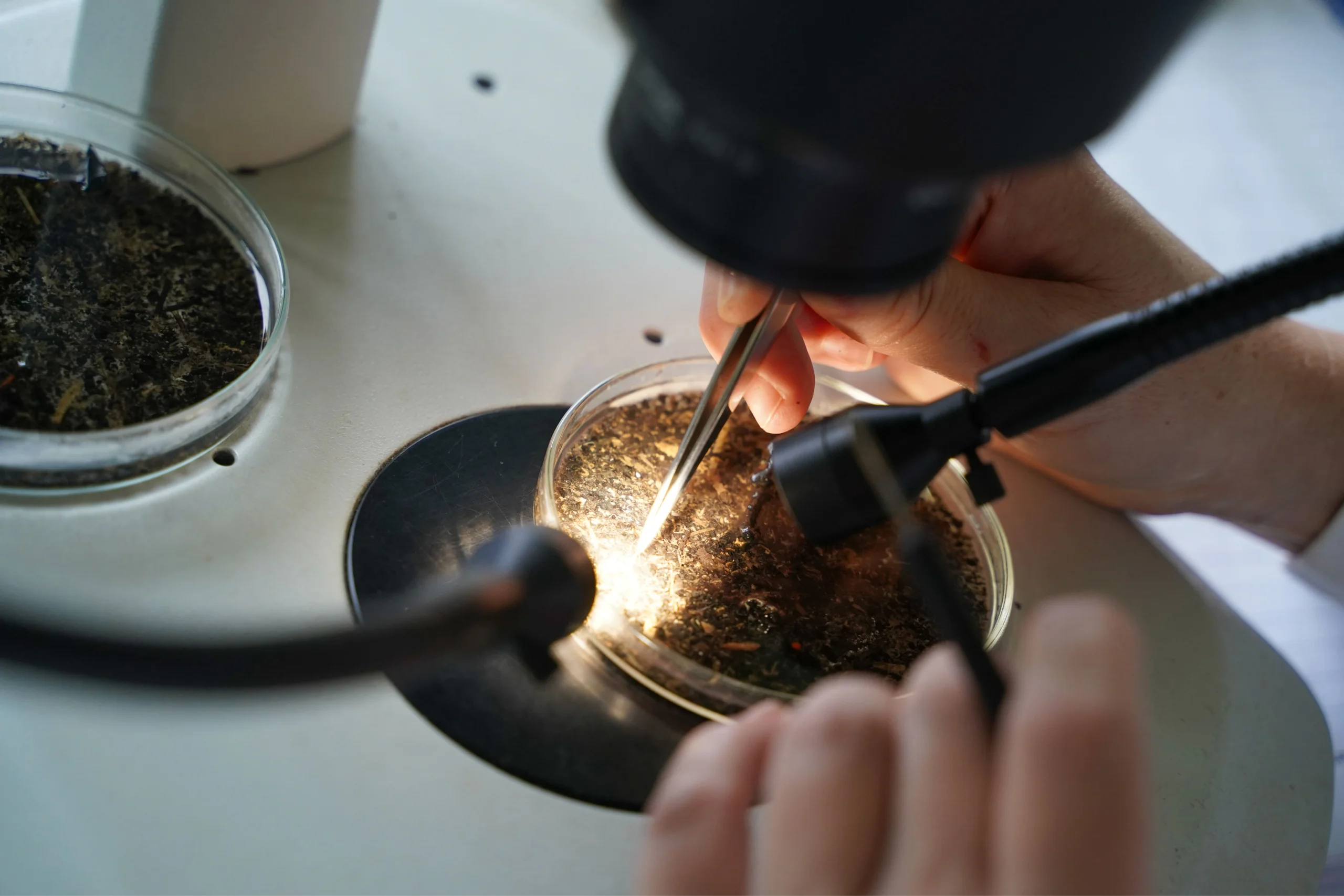
After a diatom completes its life cycle, its siliceous shell sinks to the bottom of the lake, where it remains preserved in the sediment, often for thousands of years. Diatom paleoecology is based on the analysis of sediment cores, which represent a cross-section through time, and the identification of diatom frustules trapped within the sediment. Each sediment layer thus becomes a snapshot of the lake as it once was.
An increased abundance of diatom species tolerant of elevated nutrient concentrations indicates eutrophication, often associated with the development of agriculture or human settlement within a lake’s catchment area. The occurrence of thermophilic species may indicate climate warming, while shifts between benthic and planktonic diatoms reveal changes in water level or transparency. In this way, it is possible to trace how lakes have responded to natural climatic oscillations as well as to increasing human influence.
Paleoecological records are not merely stories of the past – they help us understand the present and plan for the future. Knowledge of a lake’s natural state is essential for setting realistic conservation and restoration goals. Diatoms therefore serve not only as witnesses of distant times but also as guides in the protection of freshwater ecosystems.
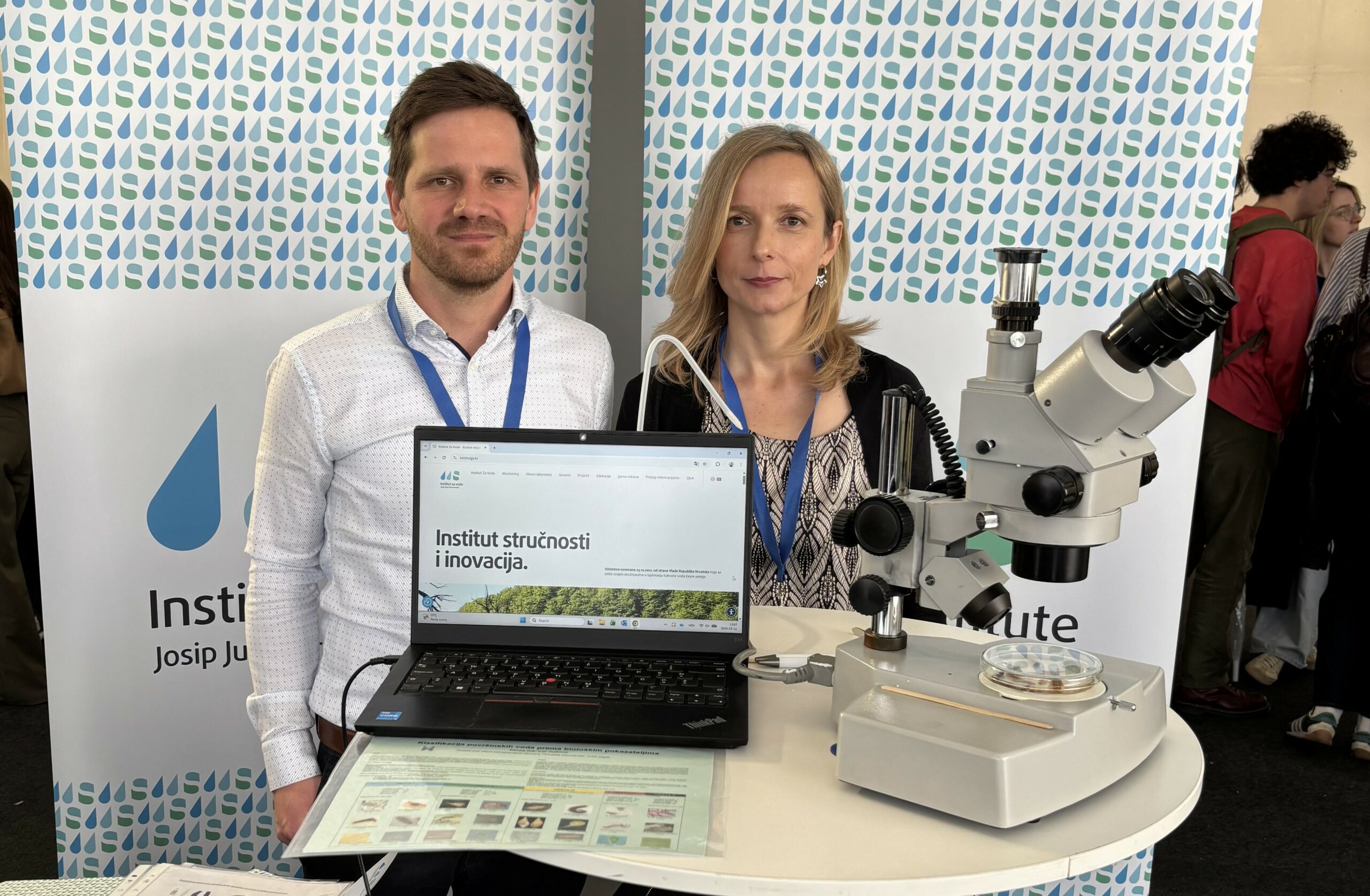
Through paleoecological analysis of diatoms, Josip Juraj Strossmayer Water Institute is able to reconstruct the natural condition of lakes prior to anthropogenic pollution and to identify differences between natural and human-induced changes. This ensures a scientifically grounded assessment of ecological water status and supports realistic planning of protection and restoration measures.
Text prepared by: Antonija Žižić Nakić
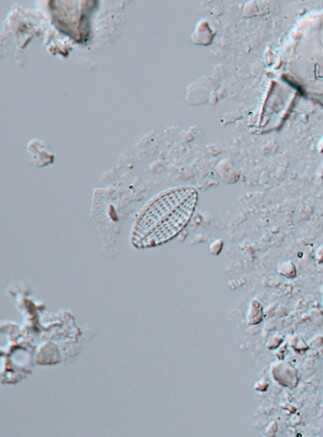
Karayevia clevei (Grunow) Bukhtiyarova, 1999, from a sediment core sample of Lake Crniševo
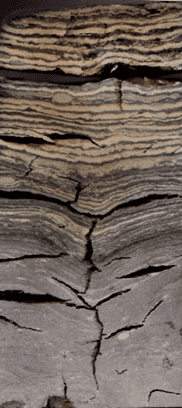
Hardened core of laminated sediments