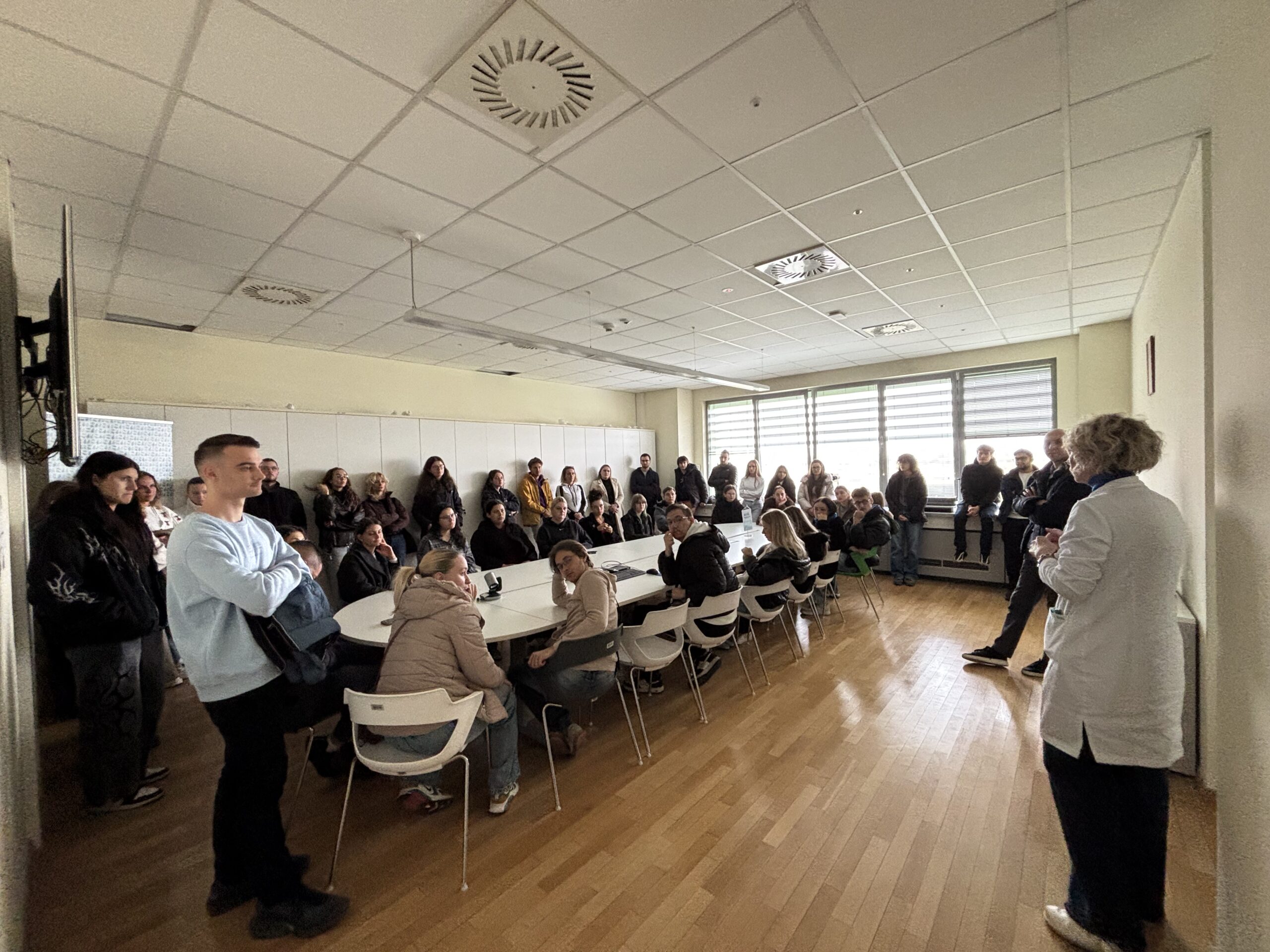
How are the chemical properties of water examined, and what can aquatic organisms reveal about the condition of an ecosystem? Around fifty graduate students from the Faculty of Agriculture at the University of Zagreb explored these questions during a visit to the Main Water Laboratory of the Josip Juraj Strossmayer Institute for Water on 5 November 2026.
The students visited the Institute accompanied by Professor Željka Zgorelec, PhD, as part of their field course in Global Ecology. The group also included international students staying in Zagreb through the Erasmus+ programme. The visit provided an opportunity to learn about laboratory procedures that link environmental knowledge with the analysis and professional assessment of water quality.
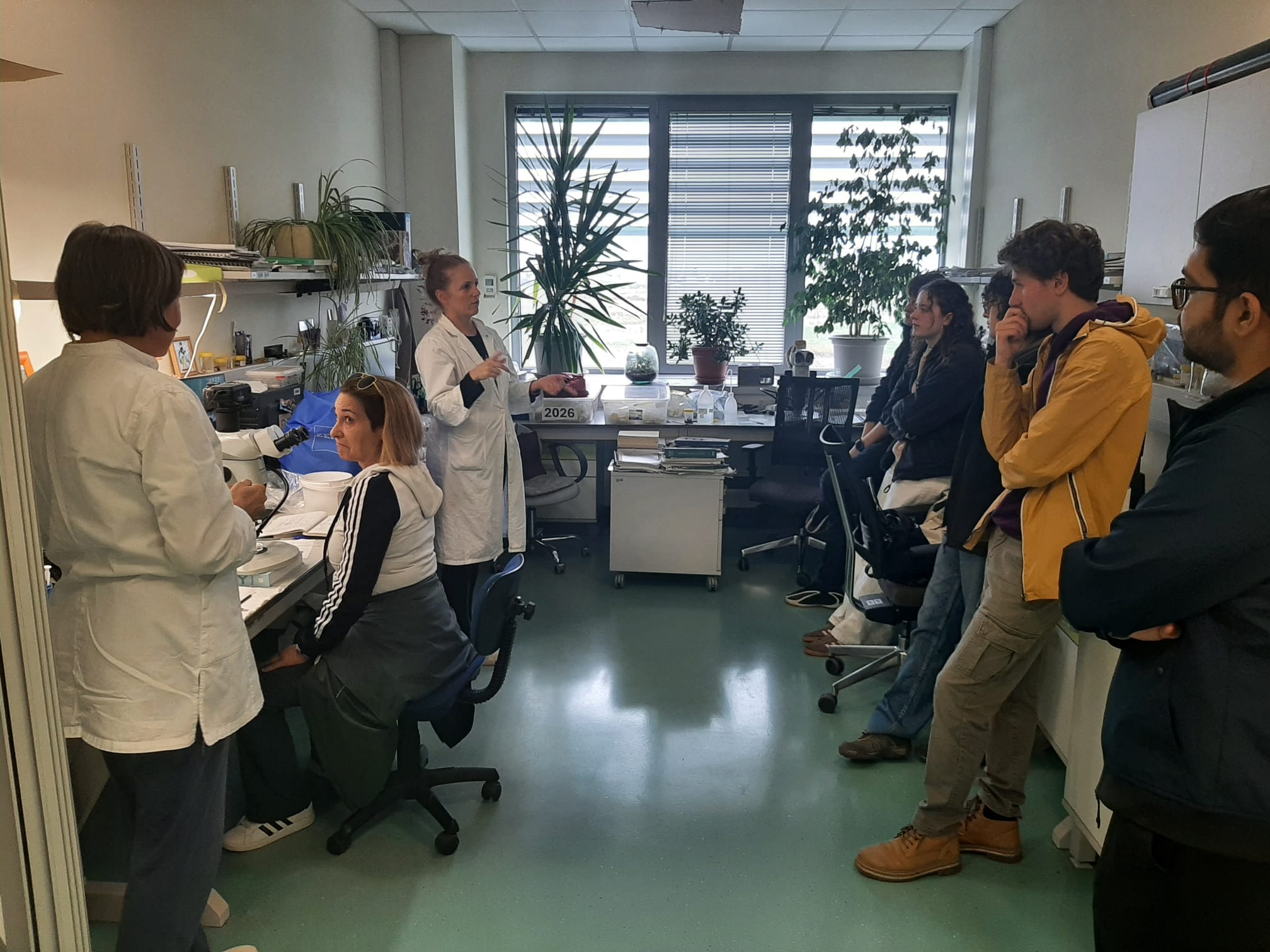
Following an introductory presentation on the Institute’s activities, the students were divided into four groups and toured three laboratory departments. Guided by Institute staff, they followed different stages of the analytical process, from sample preparation and the determination of chemical parameters to the observation of aquatic organisms.
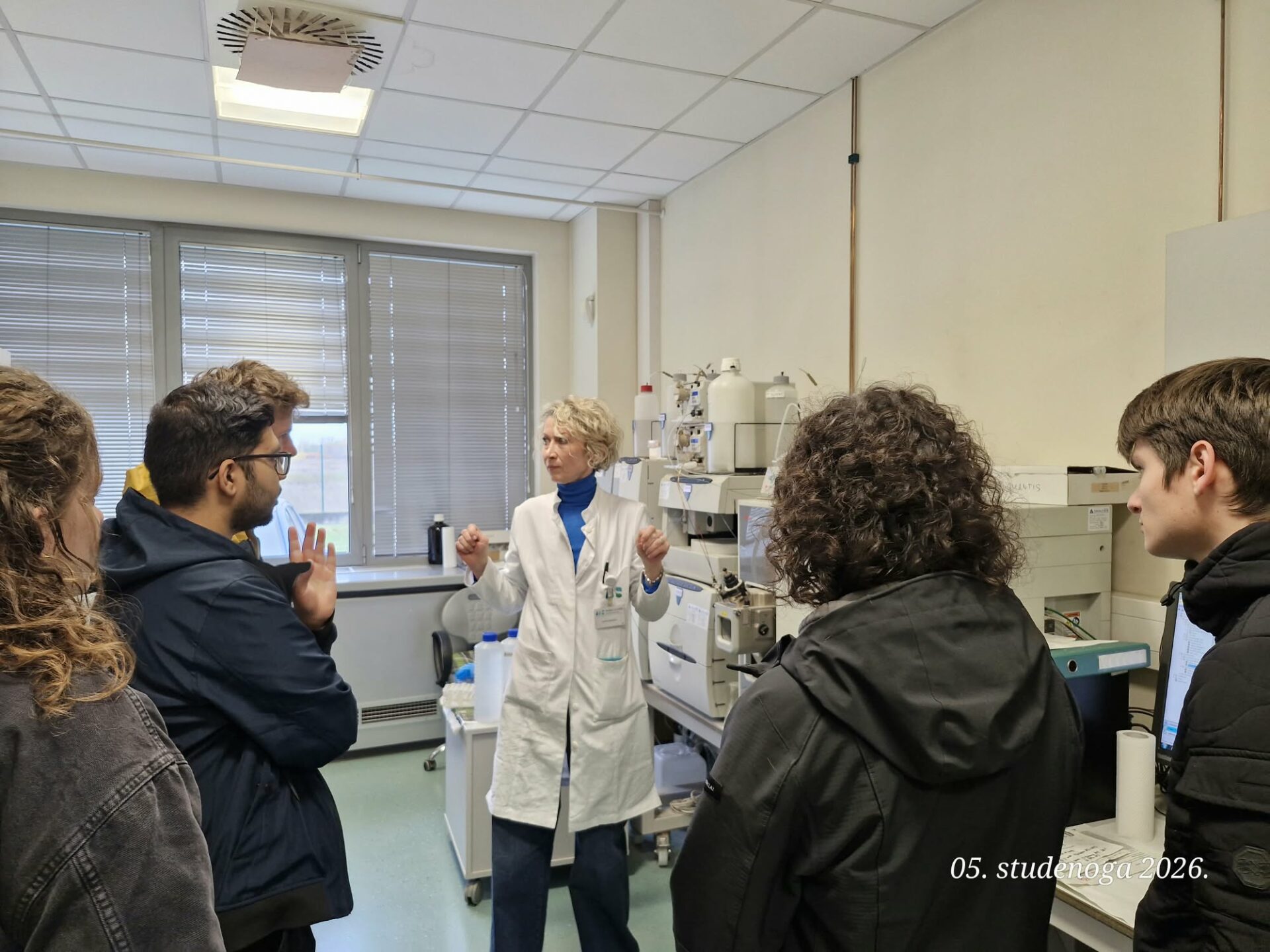
In inorganic analysis, the students were introduced to procedures for determining the basic properties of water, individual ions and metals, as well as the application of instrumental techniques in the analysis of water, sediment and biota. They were also shown procedures for preparing microbiological samples using membrane filtration.
During the presentation of organic analyses, the students learned about the application of gas and liquid chromatography and the importance of proper sample preparation. Particular attention was given to explaining how laboratory procedures are optimised to reduce the consumption of organic solvents and minimise the risk of errors during analysis.
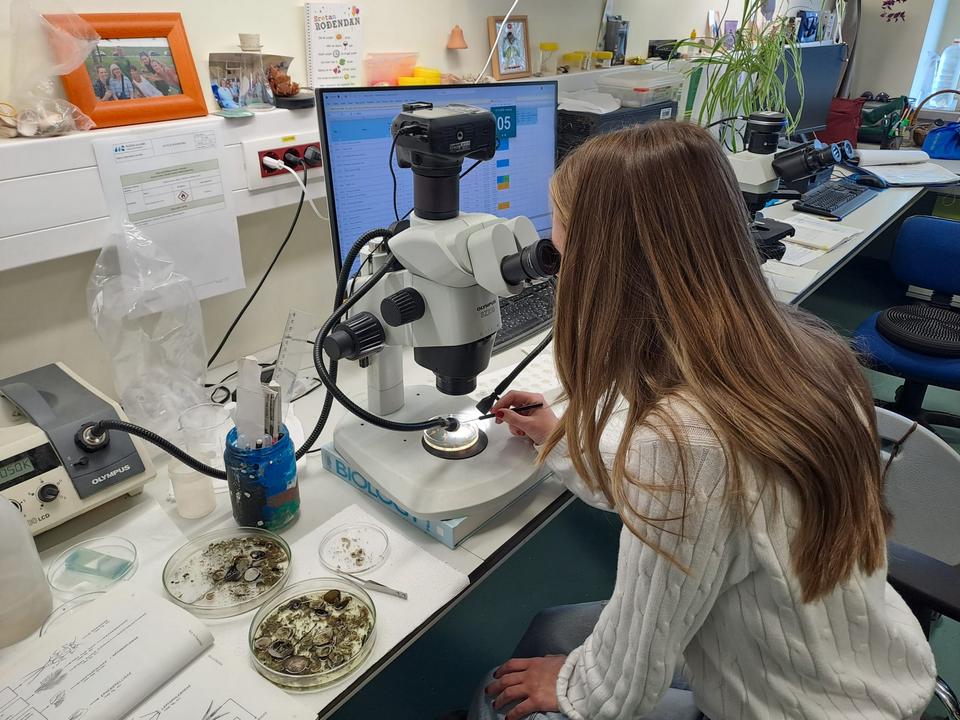
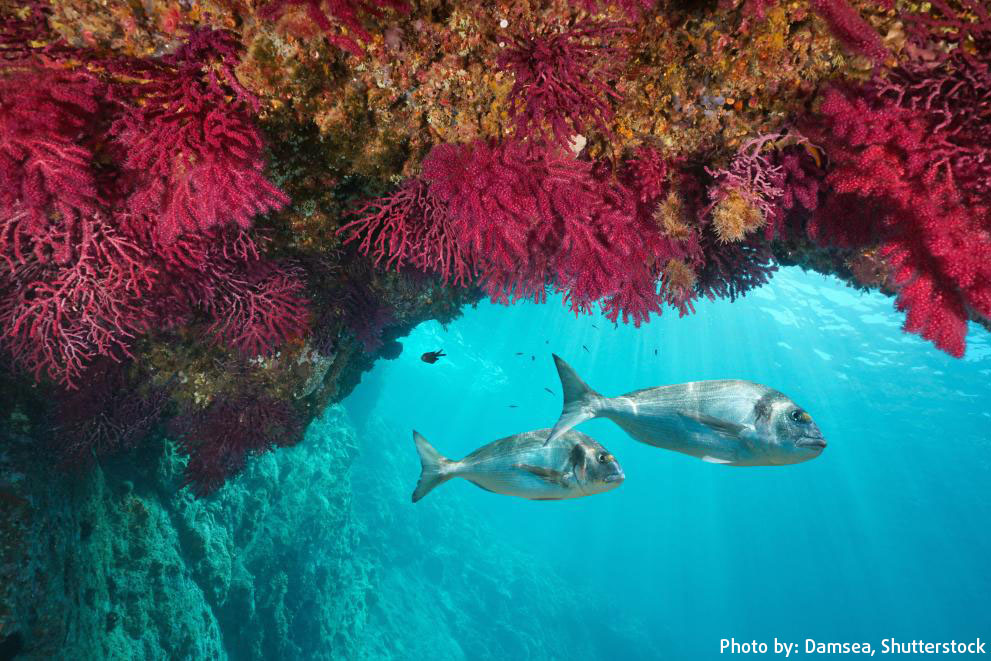
The biological part of the tour demonstrated how chemical measurements are complemented by information about aquatic life. The students were introduced to macrozoobenthos, phytobenthos and phytoplankton, as well as their role in assessing the ecological status of surface waters. By observing organisms under stereomicroscopes and microscopes, they gained first-hand insight into some of the procedures involved in laboratory processing and identification.
The students’ questions covered the methods presented and the laboratories’ areas of work, as well as opportunities for professional internships and student employment. Their interest created an opportunity to discuss ways of gaining practical experience in a specialised laboratory environment.
The visit gave the agronomy students a clearer insight into how the data needed to understand water and the environment are generated, while also allowing Institute staff to share their expertise with future professionals. This is the visit’s greatest value: introducing students not only to the equipment, but also to the knowledge, procedures and responsibility behind every laboratory result.