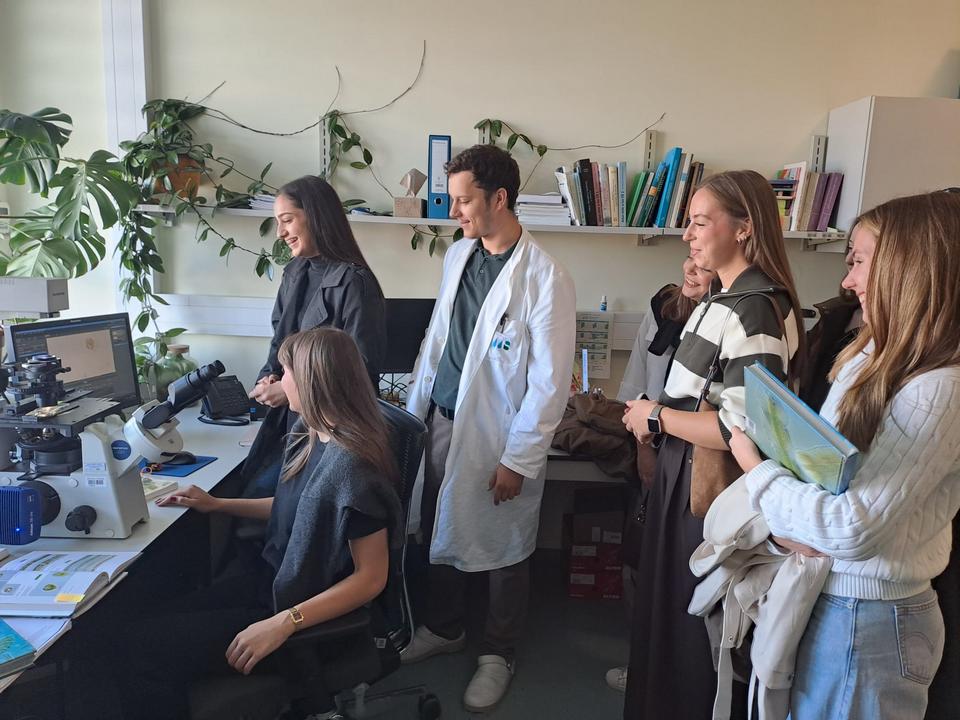
The Josip Juraj Strossmayer Water Institute welcomed 22 third- to fifth-year undergraduate and graduate students from the Department of Biology at Josip Juraj Strossmayer University of Osijek. The students were accompanied by Associate Professor Anita Galir, PhD, Professor Tanja Žuna Pfeiffer, PhD, and Professor Ljiljana Krstin, PhD.
The visit was organised as part of activities to support students’ career development, with the aim of linking the knowledge acquired during their studies with its practical application in scientific and professional institutions.
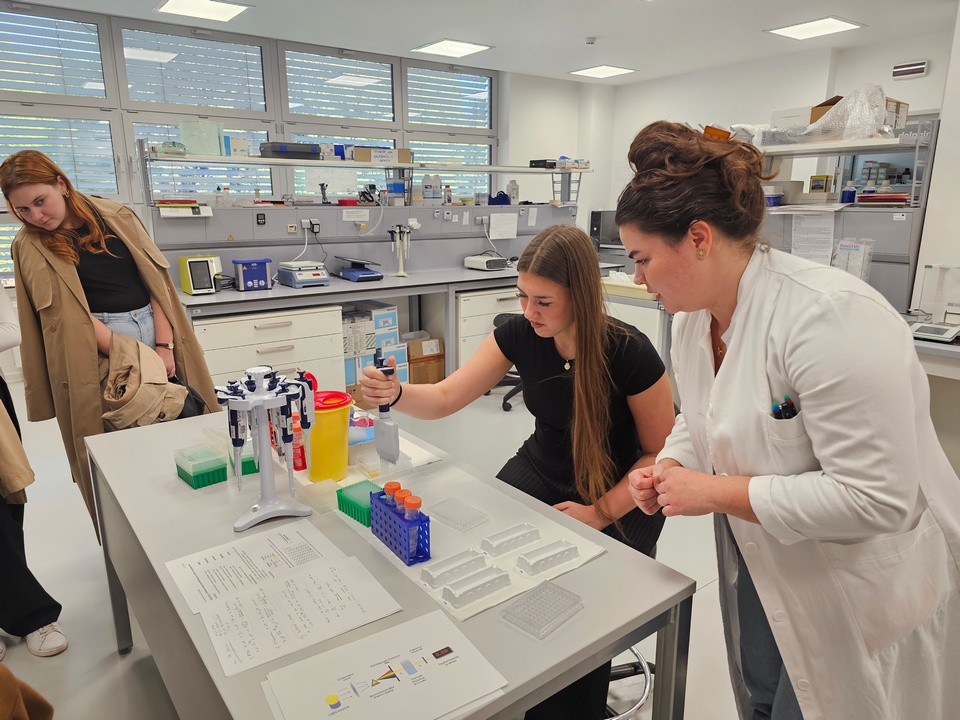
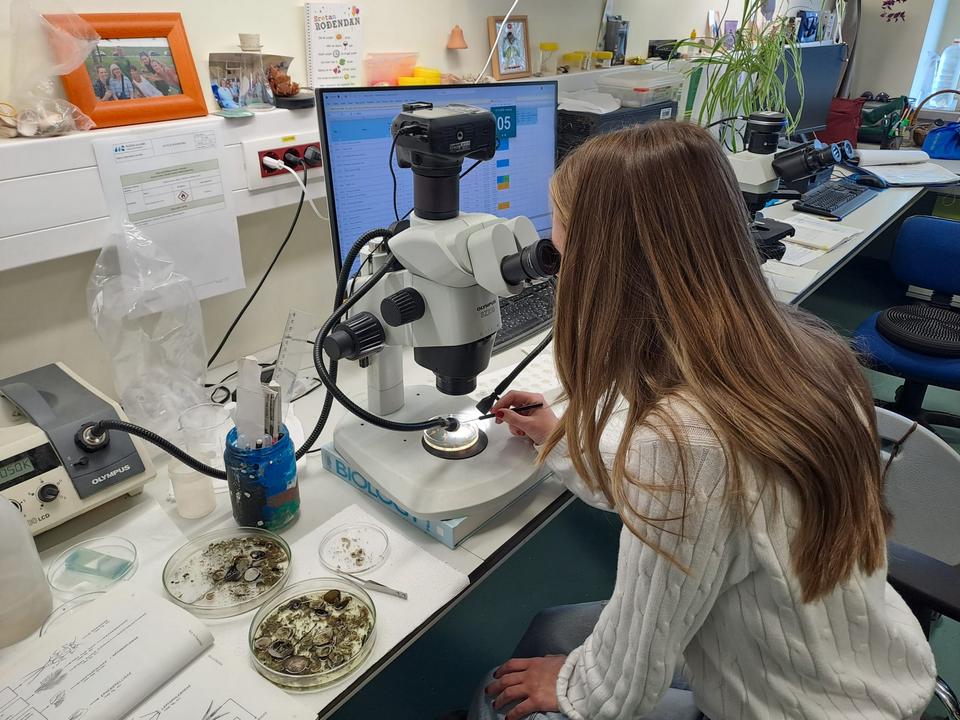
Following an introductory presentation on the Institute’s activities, the students learned about the work of the Main Water Laboratory. Divided into three groups, they were introduced to the procedures for preparing and analysing samples for three biological quality elements: macrozoobenthos, phytobenthos and phytoplankton.
Laboratory staff familiarised the students with the methods used and explained how biological indicators are applied in assessing the ecological status of water bodies. The practical demonstrations were complemented by expert explanations of the importance of these analyses for understanding the condition of aquatic ecosystems, protecting the environment, and conserving and sustainably managing water resources.
During the approximately two-hour visit, the students expanded their knowledge of aquatic ecosystem research in a real working environment and gained a more concrete insight into the role of biologists in water status monitoring. Learning about laboratory procedures and hearing from experienced professionals helped them better understand how their knowledge can be applied in their future careers.
The University and the Institute share the name of Josip Juraj Strossmayer, and visits such as this give that connection practical meaning: knowledge acquired at the University meets its real-world application in the laboratory.
By opening its laboratory to students and sharing professional expertise, the Institute supports closer links between higher education and professional practice. Such encounters contribute to the education of future biologists, stimulate interest in research and professional work, and highlight the role of the biological sciences in addressing environmental challenges.