World Food Day Through the Institute’s Data
World Food Day, observed on 16 October, carries this year’s message from the Food and Agriculture Organization of the United Nations (FAO): “Innovate Today. Feed Tomorrow.”
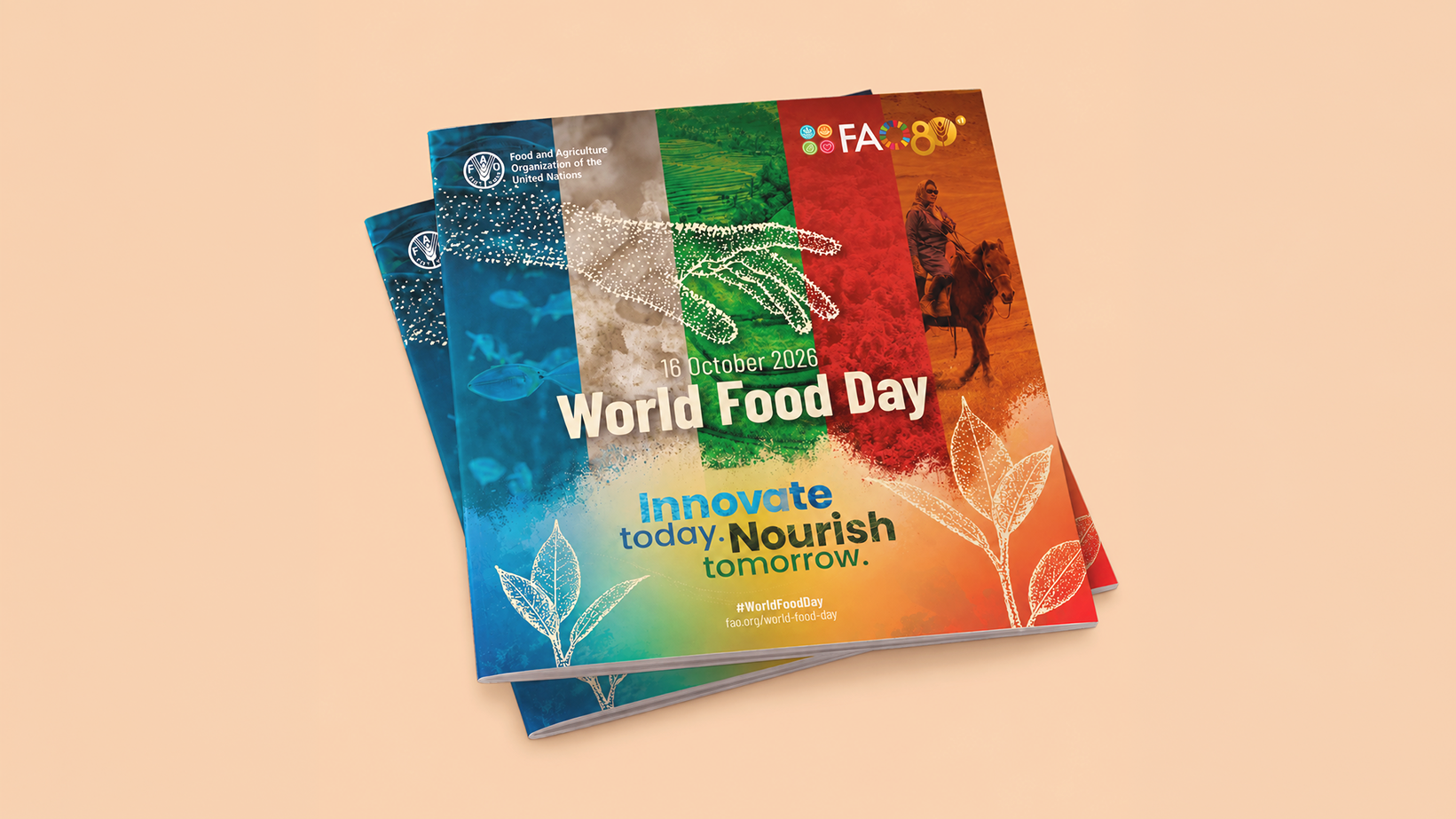

World Food Day, observed on 16 October, carries this year’s message from the Food and Agriculture Organization of the United Nations (FAO): “Innovate Today. Feed Tomorrow.” FAO calls for science, technology, innovation and traditional knowledge to be brought together to ensure that food production meets today’s needs while preserving resources for future generations. For the Josip Juraj Strossmayer Institute of Water, this message is firmly grounded in monitoring results: food production security cannot be separated from the protection of water resources.
The Institute’s analyses for the 2022–2024 period show that nitrogen and phosphorus parameters are among the most common reasons for unfavourable physicochemical assessments of natural rivers in Croatia. In 2024, nitrates were among the parameters determining such an assessment at 94 monitoring stations, total nitrogen at 73 stations, and total phosphorus at 45 stations.
Nitrogen and phosphorus are essential for plant growth, but nutrients that are not taken up by plants can enter the aquatic environment through leaching and surface runoff. The European Environment Agency (EEA) warns that high inputs of nitrogen and phosphorus from agricultural areas and wastewater can cause eutrophication, changes in aquatic communities and biodiversity loss. According to the EEA, the earlier decline in nitrate concentrations in European rivers has largely stalled in recent years. This does not contradict the findings of individual Croatian measurements, but it shows that the Institute’s results form part of a broader European challenge in nutrient management.
At the same time, the Institute’s results reveal both positive changes and pressures that persist. In natural rivers, the proportion of assessed stations receiving a moderate or worse rating for total phosphorus decreased from 22.3% in 2022 to 18.1% in 2024, while the proportion for ammonium fell from 24.3% to 18.3%. For nitrates, an unfavourable rating was recorded at 23.8% of stations in 2022, 29.1% in 2023 and 26.9% in 2024. These percentages refer to stations assessed for each individual parameter, rather than to the proportion of all rivers in Croatia.
A targeted assessment of eutrophication further identifies areas requiring attention. Among the same set of 134 natural river monitoring stations located in areas susceptible to eutrophication, nitrate-vulnerable zones and potentially vulnerable areas, a more favourable trophic status category was recorded in 2024 than in 2022 at 30 stations. The category remained unchanged at 93 stations, while 11 stations showed a less favourable category. At 23 stations, categories corresponding to poor or very poor conditions according to trophic status criteria were recorded in all three years. This is a specific assessment of eutrophication, not an overall assessment of ecological status.
Pesticides also require attention. In the monitoring of natural, artificial and heavily modified rivers, the environmental quality standard for the average annual concentration of the insecticide cypermethrin was not met at nine stations in 2022, 42 in 2023 and ten in 2024. These pronounced year-to-year differences warrant an analysis of potential sources, the transport of substances, hydrological conditions and the scope of monitoring. On their own, they do not establish a long-term trend or allow every exceedance to be attributed to a particular activity or user.
Connecting these findings is an important way in which the Institute contributes to sustainable food production. By monitoring nutrients, pollutants and biological quality elements, the Institute identifies locations with recurring deviations and provides an evidence base for further research, prioritising action and evaluating the effectiveness of measures. The findings do not justify attributing all pressures to agriculture: municipal and industrial wastewater can also be important sources. Measures must therefore address the pressures identified in each specific river basin.
Irrigation should be considered in conjunction with soil and nutrient management, rather than viewed solely as a means of supplying additional water. FAO warns that excessive irrigation can increase nutrient leaching, while inadequate water and drainage management can contribute to salt accumulation in the soil. Crop requirements, soil properties, and the availability and quality of water must therefore all be considered within the same plan.
For the water sector, this year’s FAO call for innovation to secure the future of food means translating knowledge into more precise decisions: aligning fertilisation with soil analyses and plant requirements, irrigation with the capacity of the water system, and plant protection practices with assessments of risks to water resources. The Institute’s data provide a measurable basis for this approach. Protecting water resources is not an obstacle to food production; it is a prerequisite for ensuring that food production remains reliable for generations to come.