National monitoring data show why the state of the sea must be assessed through several interconnected indicators. Data from the Josip Juraj Strossmayer Institute for Water Management reveal that the predominantly favourable ecological status of assessed coastal monitoring stations is accompanied by chemical pressures that cannot be fully identified through water testing alone. A new report by the United Nations Environment Programme (UNEP) offers an opportunity to place these national findings in a broader context of reliable monitoring and the protection of marine ecosystems.
The Institute’s report, *The State and Changes of Water in the Republic of Croatia from 2022 to 2024*, shows that in 2024 very good or good ecological status was recorded at 60 out of 80 assessed coastal water monitoring stations. This result refers to the monitored stations, not to the proportion of the Adriatic Sea’s surface area. Ecological assessment combines the condition of biological communities with environmental conditions, providing an important, but not exclusive, perspective on the state of the sea. It should also be noted that the range of indicators included in the assessment varied between monitoring stations.
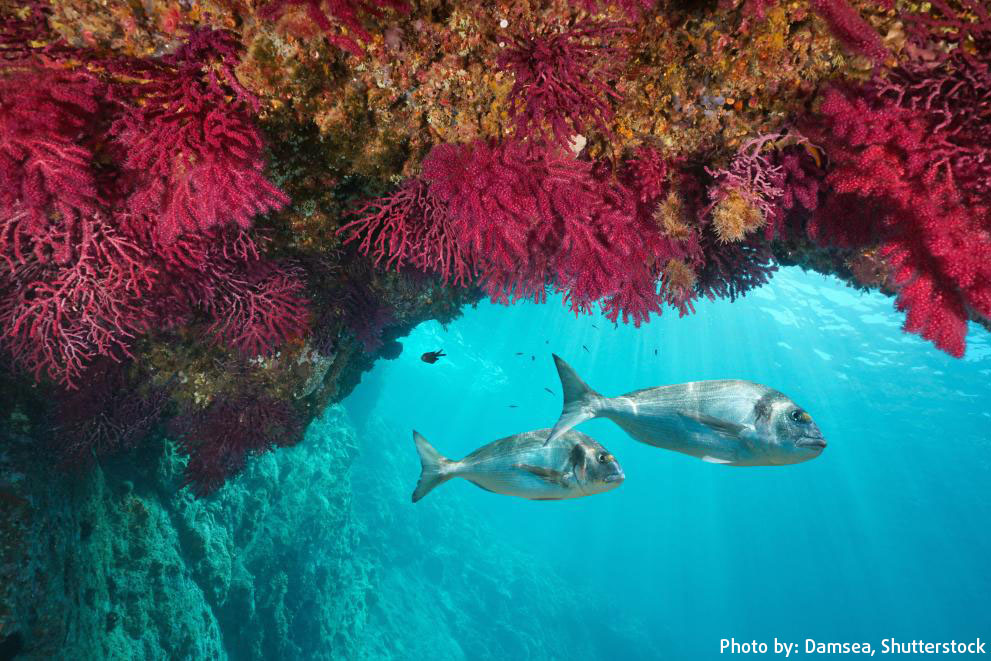
Among the biological quality elements monitored in the Institute’s report are seagrasses, which contribute to the assessment of the ecological status of coastal waters. The UNEP report considers seagrass meadows among blue carbon ecosystems, whose protection and restoration can contribute to carbon storage, biodiversity conservation and coastal resilience. However, it is important to distinguish between the purposes of these monitoring activities. Assessing ecological status on the basis of seagrasses does not, in itself, constitute a measurement of the amount of carbon stored by these meadows.
Chemical assessments reveal another dimension of the state of the sea. In 2024, good chemical status, based on the indicators that could be assessed in water, was recorded at 22 out of 32 coastal water monitoring stations. At the same time, good chemical status was not achieved in biota, i.e. aquatic organisms, at 24 out of 27 assessed stations. The most common reasons for failure to achieve good status in biota included mercury and brominated diphenyl ethers.
The results of these assessments complement one another. A favourable finding in water does not necessarily mean that the standards for substances in organisms have also been met. It is precisely the comparison of different indicators that provides a more comprehensive insight into the pressures affecting monitored waters.
A similar pattern was recorded in transitional waters. In 2024, good chemical status in water was established at 15 out of 24 monitoring stations, while it was not achieved in biota at 19 out of 20 assessed stations. These findings demonstrate the importance of examining different components of the aquatic environment. However, they do not, in themselves, prove the existence of a new local source of pollution, nor do they constitute an assessment of whether fish are safe for human consumption.
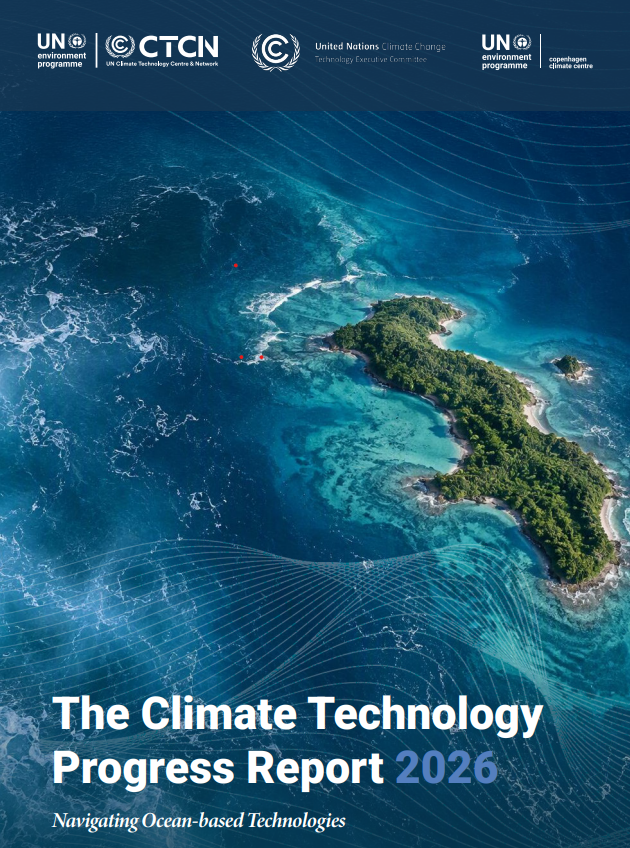
The importance of linking measurements, data and expert interpretation is also highlighted in the report *Climate Technology Progress Report 2026*, presented by UNEP on 28 October 2026. The report focuses on the climate-related role of the ocean and the need for a more reliable understanding of the processes that influence its capacity to absorb carbon dioxide and heat.
UNEP warns that this capacity cannot be taken for granted as a constant. Ocean warming, acidification, oxygen loss, pollution and ecosystem degradation are disrupting the processes that underpin the ocean’s role in regulating the climate. Reliable data are essential for determining where ecosystems should be protected or restored, what requires further research and how the effects of implemented measures can be verified.
Through the “Ocean Carbon Intelligence” framework, the report brings together observations, data systems, modelling and expert interpretation. In addition to the protection and restoration of blue carbon ecosystems, it examines new approaches to removing carbon dioxide from the atmosphere. It emphasises, however, that such approaches require scientific assessment of their benefits and risks and can complement, but not replace, reductions in greenhouse gas emissions.
The Institute’s findings provide a national example of the importance of integrating different datasets. Although they do not directly measure how much carbon the Adriatic Sea captures or stores, they contribute to a better understanding of the ecological and chemical status of monitored waters. Monitoring seagrasses forms part of this knowledge about ecosystem conditions, while chemical assessments identify pressures that must be taken into account when planning their protection. Understanding the existing state of the environment is an important starting point for decision-making, but it is not a substitute for measuring the effects of individual interventions.
When comparing results, it is important to distinguish between changes in environmental conditions and changes in monitoring coverage. The number of monitoring stations with an ecological status assessment for coastal waters increased from 22 in 2022 to 80 in 2024, reflecting planned monitoring rotation and differences in the range of quality elements assessed. Annual percentages should therefore not be interpreted directly as evidence of environmental improvement or deterioration.
The value of the Institute’s data lies not only in the individual assessments, but also in clearly identifying what the results confirm and what still requires further investigation. This is where national findings connect with UNEP’s global messages. Understanding and protecting the marine environment requires long-term measurements, the integration of different indicators and a responsible interpretation of what the data can and cannot tell us.
Further information and access to the report are available via the following link