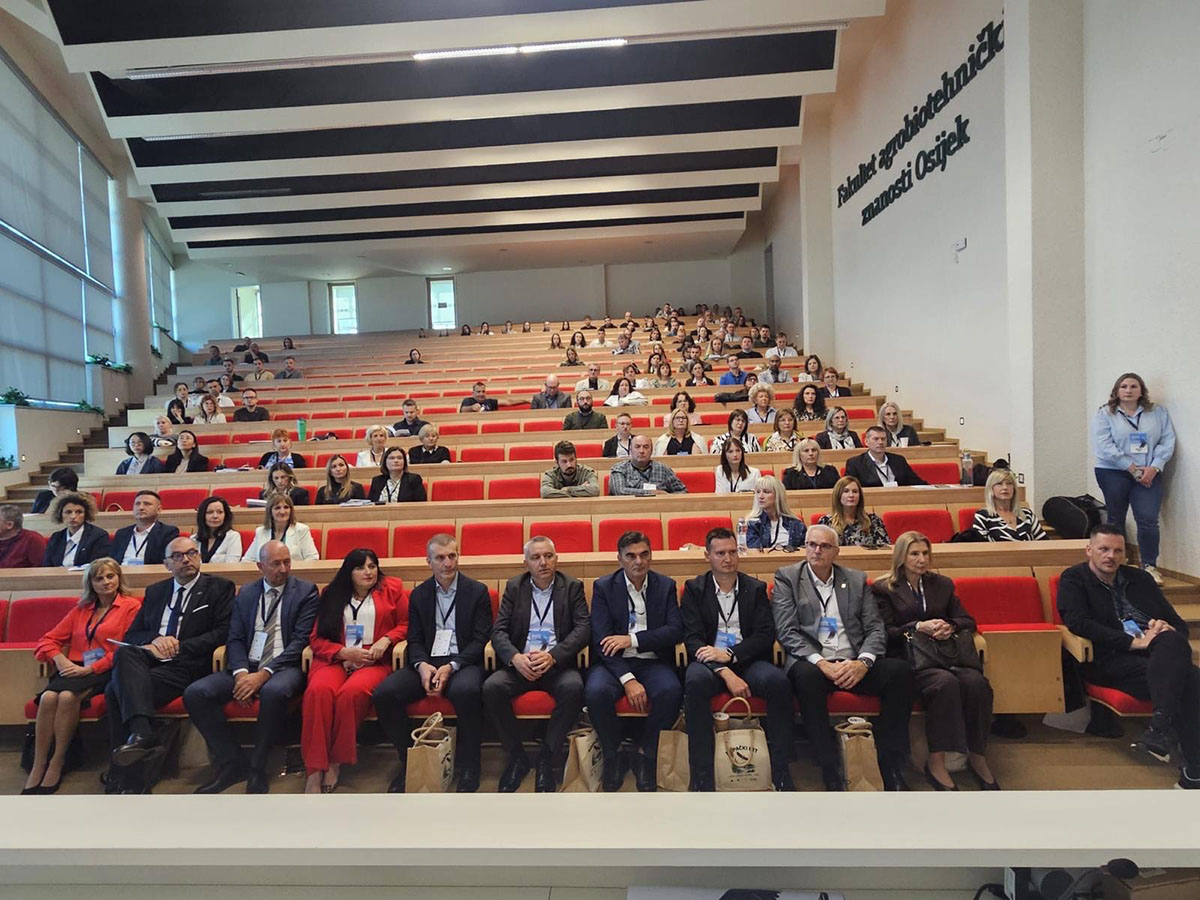
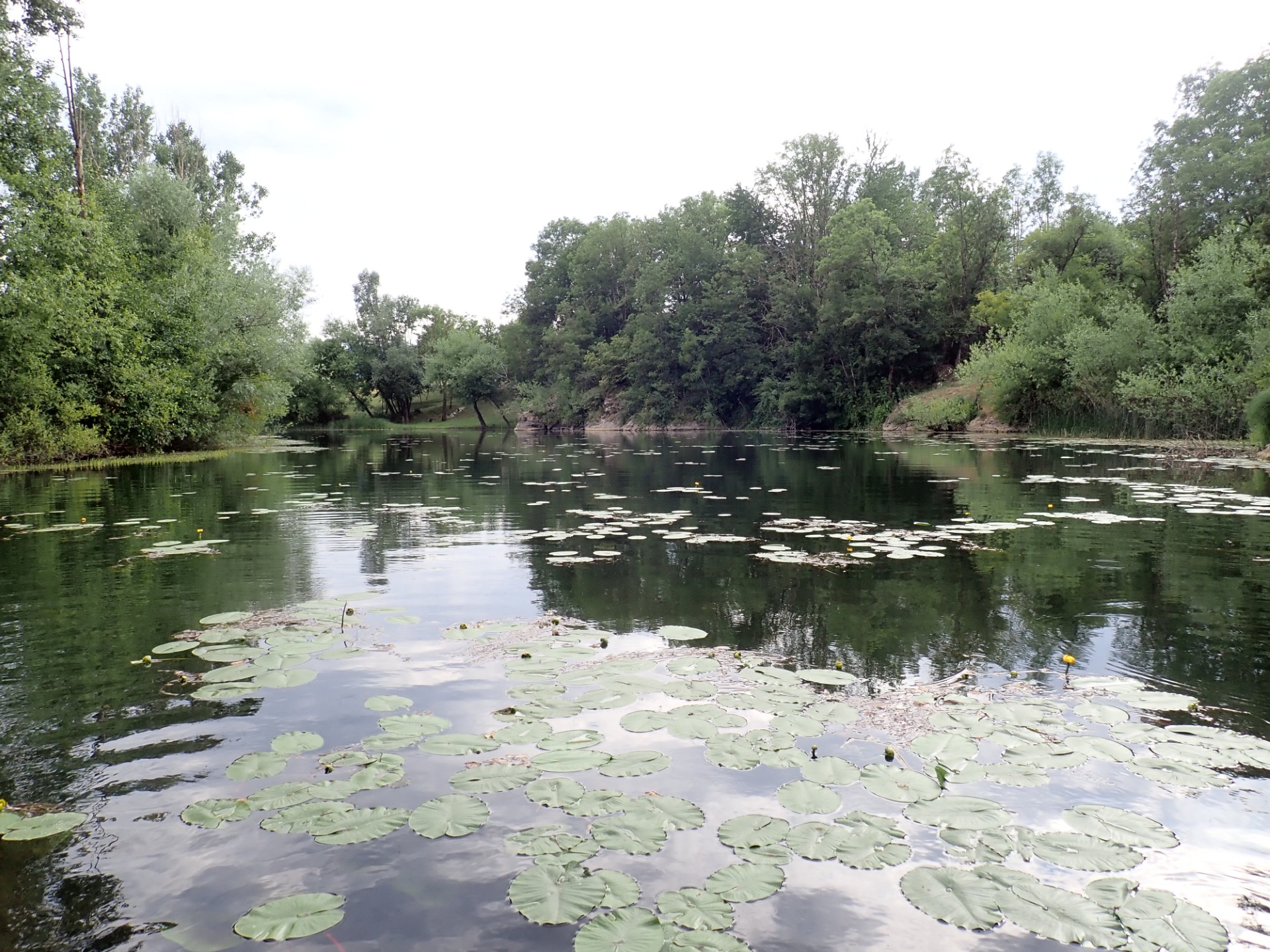
The 15th International Symposium “Kopački rit Yesterday, Today, Tomorrow 2026” is being held in Osijek on 1 and 2 October, bringing together scientists, experts, public institutions and other stakeholders dedicated to nature conservation, water management and biodiversity. The symposium is taking place in a year marking the 50th anniversary of the legal protection of Kopački rit as a nature park, as well as the fifth anniversary of the UNESCO Five-Country Biosphere Reserve Mura–Drava–Danube.
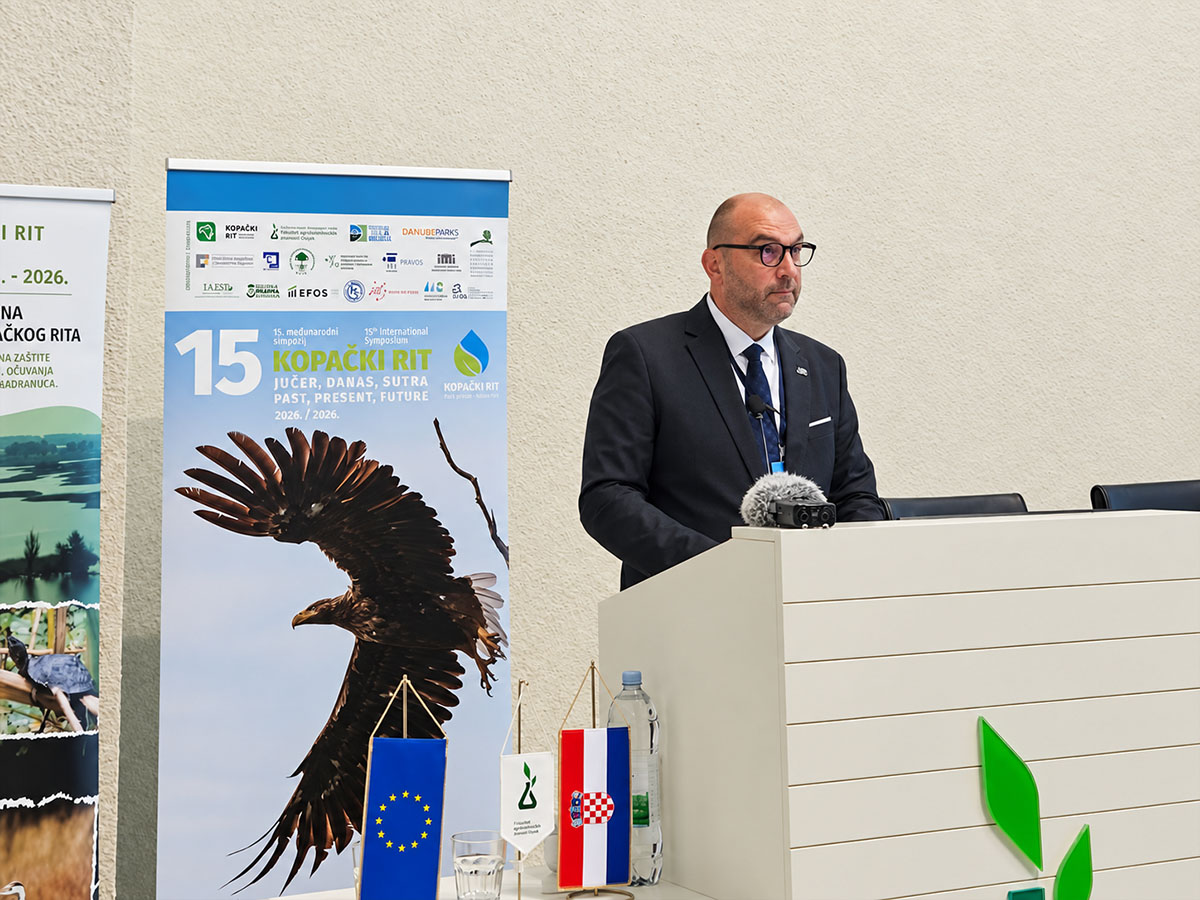
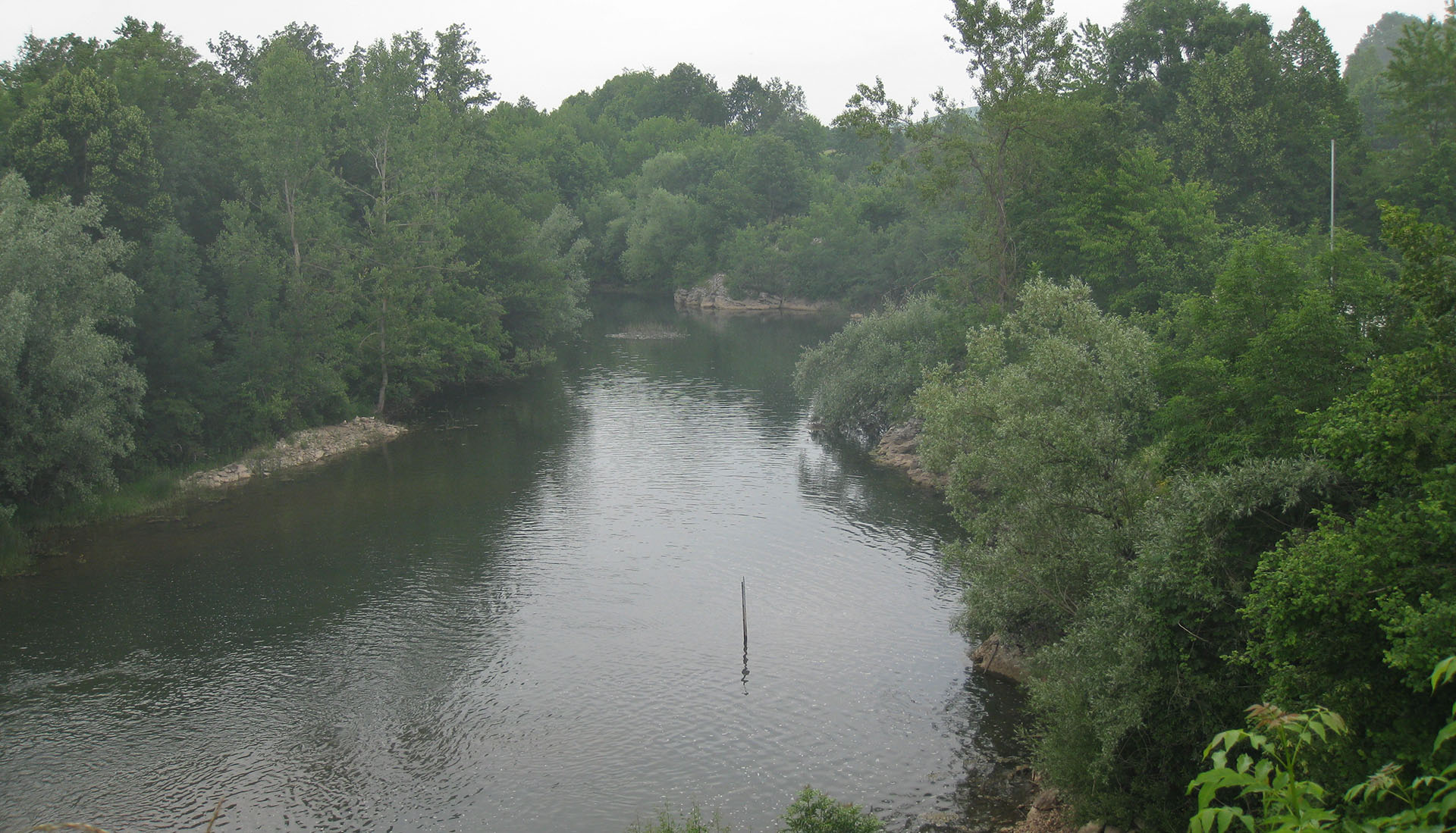
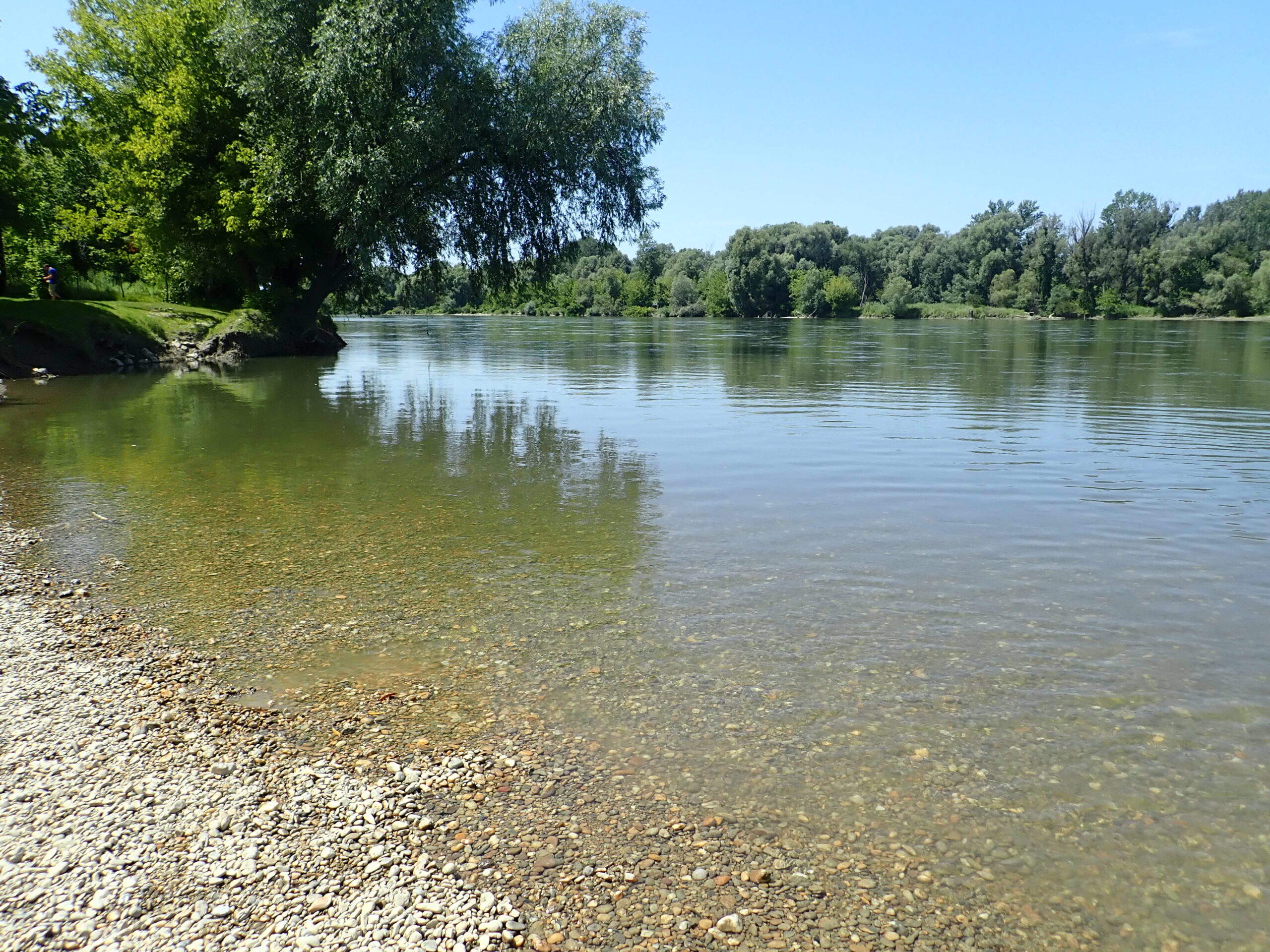
The opening ceremony was attended by Mario Šiljeg, Director of the “Josip Juraj Strossmayer” Institute for Water. In his welcome address, he emphasised that Kopački rit is a floodplain whose life depends on the connectivity of the Drava and Danube rivers with their side channels, lakes and floodplain areas.
“Kopački rit is not a wetland next to a river. It is a space created by rivers. When water has a pathway, this system regenerates. When that pathway weakens, the system becomes more vulnerable,” said Director Šiljeg.
This year’s symposium is being held after a period of exceptionally low water levels. At the end of September, the Drava River at Osijek reached its lowest water level ever recorded, at minus 201 centimetres. Such an event does not, in itself, indicate ecological collapse, but prolonged low water levels can weaken connectivity between the main river channel, side channels and floodplain, increasing pressure on aquatic habitats.
“Low water is not only a lack of centimetres; it is a lack of connectivity. When side channels lose their connection with the river, conditions for aquatic life, habitat regeneration and the functioning of the entire floodplain system change,” Šiljeg emphasised.
The Institute continuously monitors the status of groundwater and surface water. Analysis of monitoring data for the period 2022–2025 shows that the Čarna – Zlatna Greda monitoring station maintained good chemical status throughout the observation period. At the same time, the results concerning the ecological status and potential of surface waters indicate the need for further work, particularly with regard to biological quality elements, as well as physicochemical and hydromorphological factors. Such findings should be interpreted comprehensively by linking data on groundwater and surface water, the water regime, biology and land use. In 2026, monitoring in the Park covers three groundwater monitoring stations and eight surface water monitoring stations.
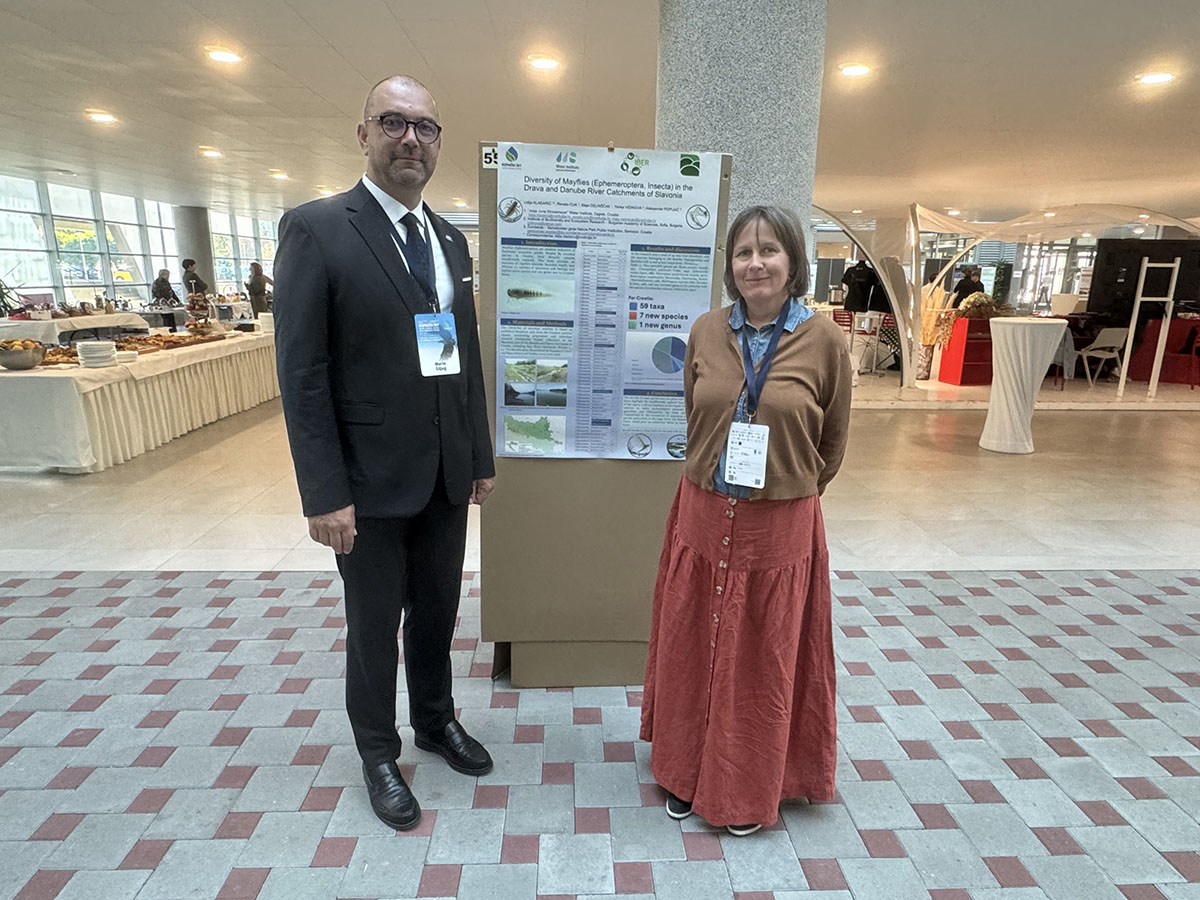
The Institute was also represented at the symposium by Lidija Kladarić and her colleagues Renata Ćuk, Maja Celinščak, Yanko Vidinov and Aleksandar Popijač. They presented the paper “Diversity of Mayflies (Ephemeroptera, Insecta) in the Drava and Danube River Basins in the Slavonia Region.” Mayflies are important biological indicators of the condition of freshwater ecosystems, making this research a valuable contribution to understanding the state of rivers and water-dependent habitats.
Kopački rit demonstrates that the conservation of water resources and biodiversity requires an integrated approach combining nature conservation, water management and scientific research. Nature-based solutions, such as the preservation and restoration of floodplains and the natural connectivity of watercourses, are an important part of adapting to droughts, floods and other climate extremes.