Mayflies represent a diverse group of aquatic insects whose larvae play an important role in freshwater ecosystems. Although often unnoticed, they participate in processes that influence water quality and ecosystem stability.
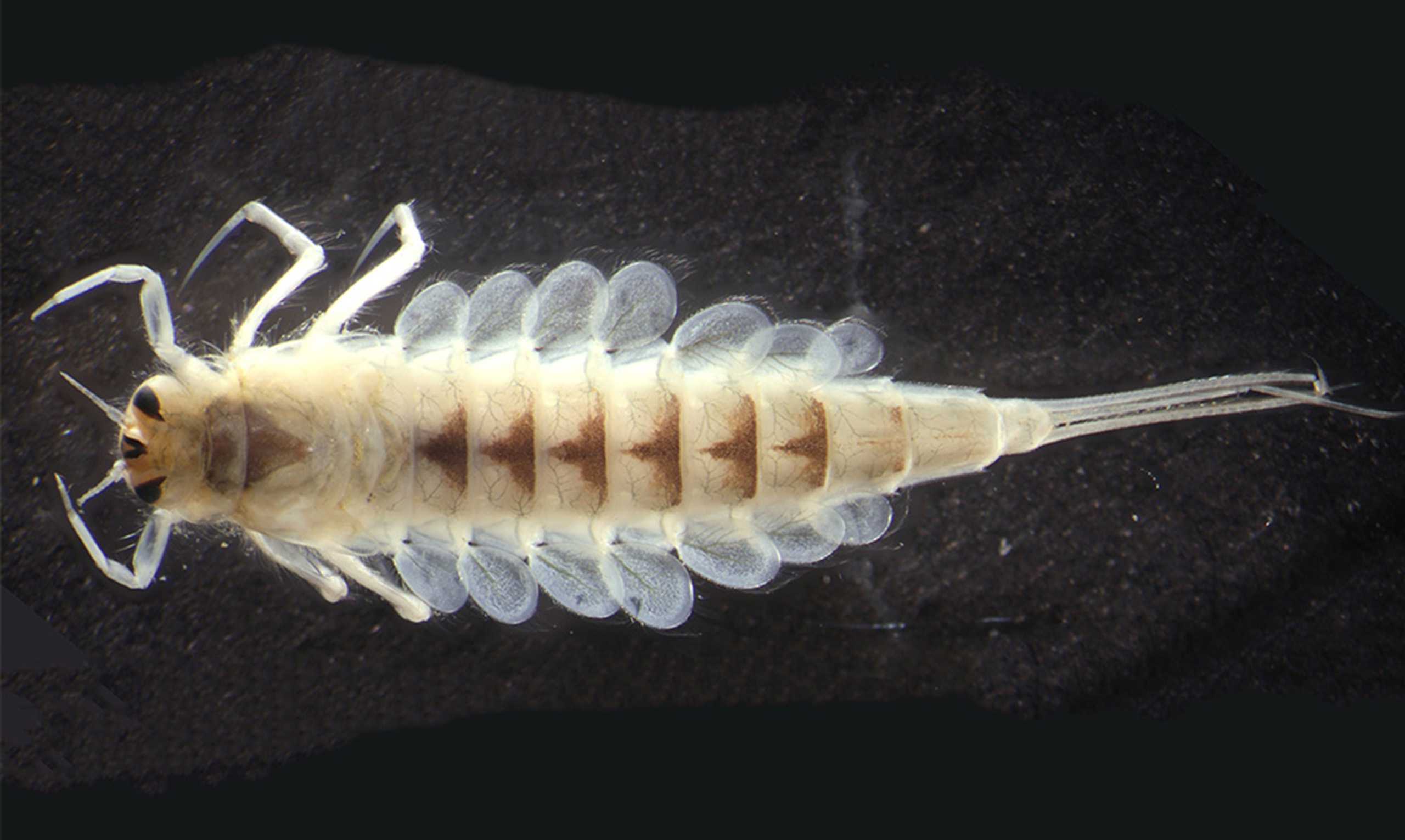
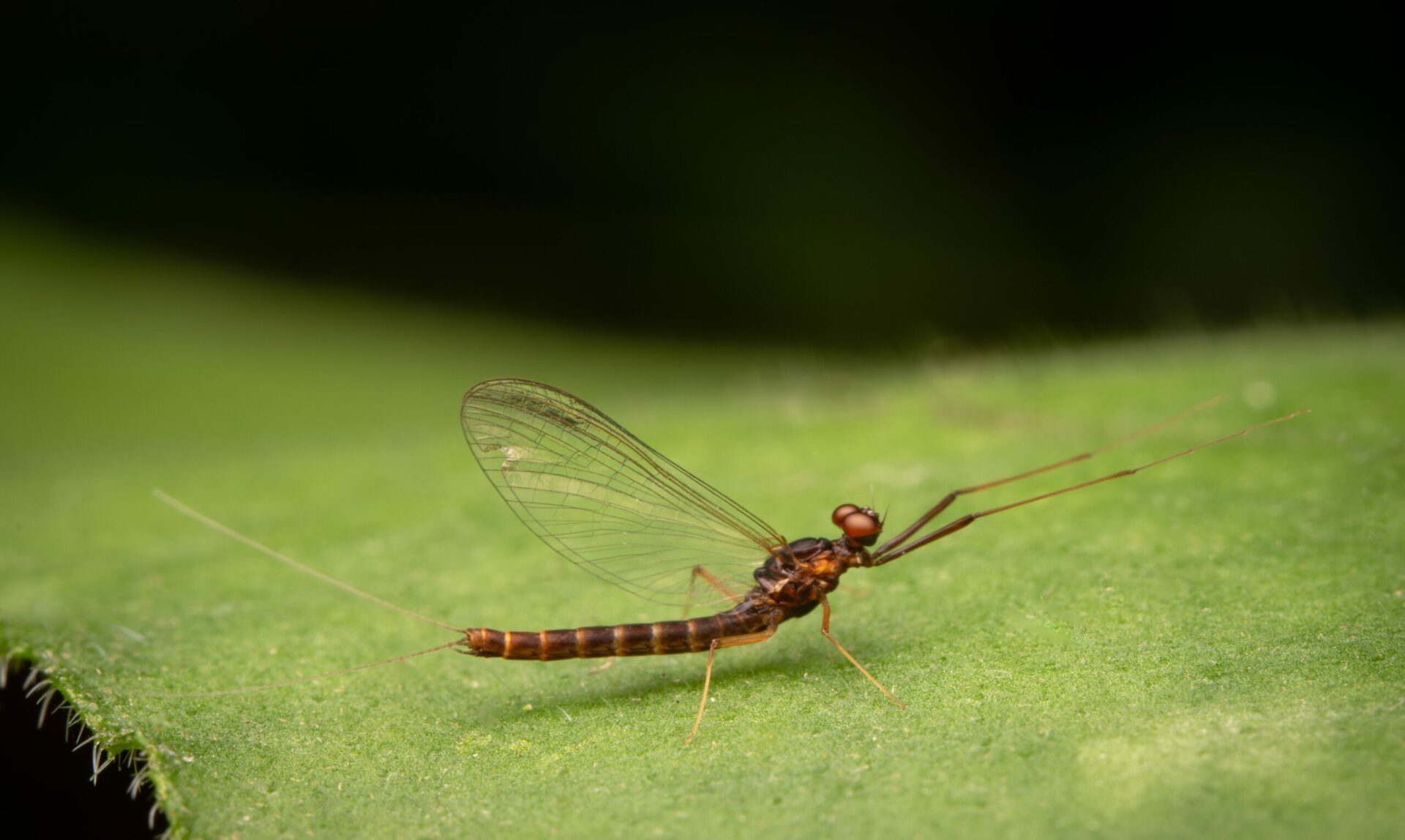
Their life cycle begins with the laying of eggs on the water surface, after which the eggs sink to the bottom where the larvae develop. During growth, the larvae undergo several moulting stages. Once development is complete, a winged form emerges from the water which, unlike most insects, moults once more before reaching adulthood. Adult mayflies live only briefly, do not feed, and die shortly after reproduction. The larvae play an important role in food webs as they serve as a food source for aquatic insects, fish, amphibians, and birds. During mass emergence events, adult mayflies also become food for terrestrial animals, thereby enabling the transfer of energy between aquatic and terrestrial ecosystems.
In addition to their role in food webs, mayflies contribute to the decomposition of organic matter and the cycling of nutrients. Some species shred organic material, while others feed on algae and biofilm or filter particles from the water. In this way, they contribute to energy transfer and ecosystem productivity. By moving through sediment, they improve oxygen exchange within the substrate, benefiting other organisms and decomposition processes, and supporting the natural self-purification of waters.
Mayflies are highly sensitive to environmental changes, including pollution, reduced oxygen concentrations, temperature and pH fluctuations, and habitat degradation. For this reason, their larvae serve as reliable biological indicators of water status, while changes in their abundance and community composition may indicate alterations in water quality. Interestingly, mayflies are the only insects that possess two winged stages—subimago and imago—with the transitional form moulting once more before reaching its final adult stage.
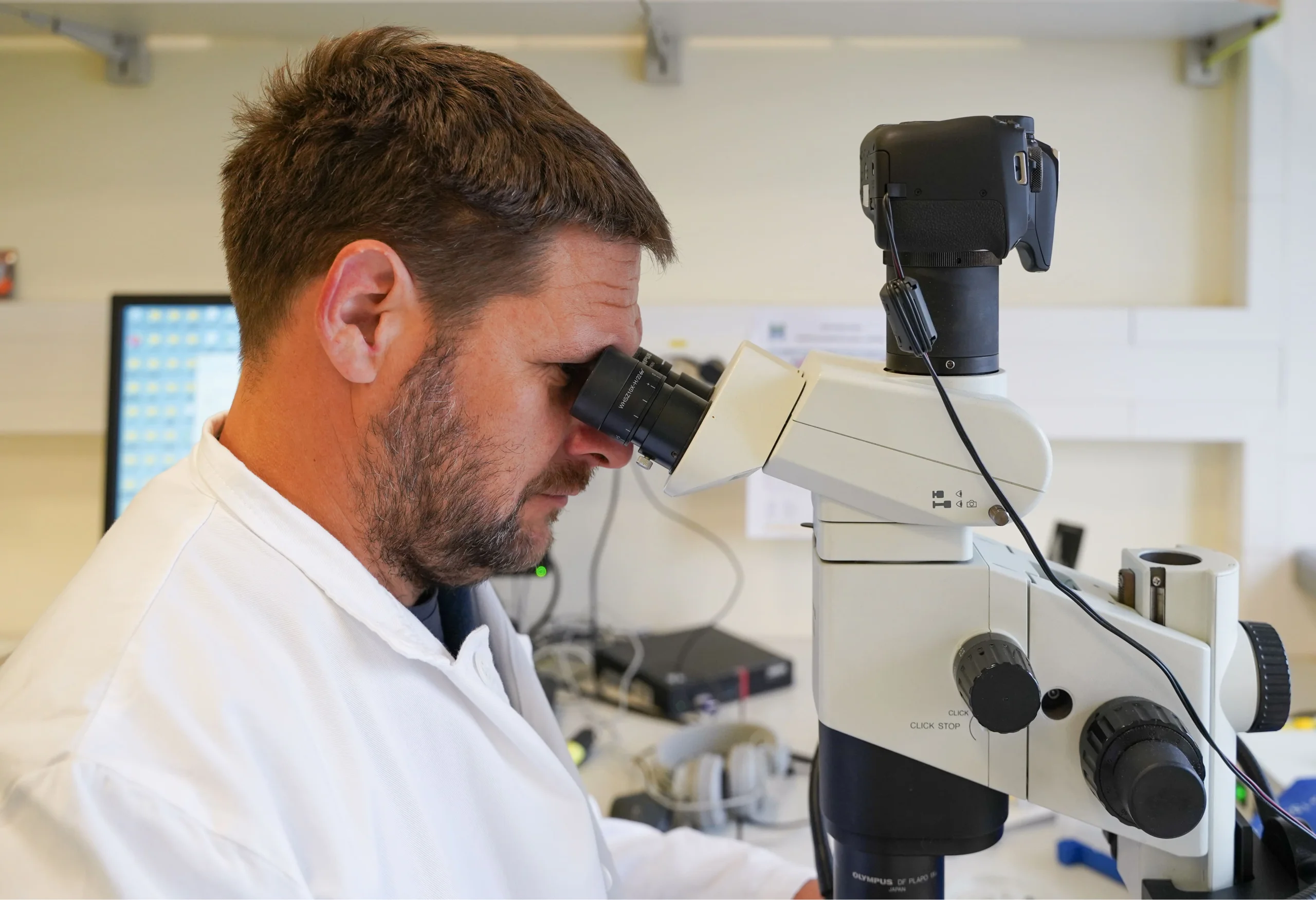
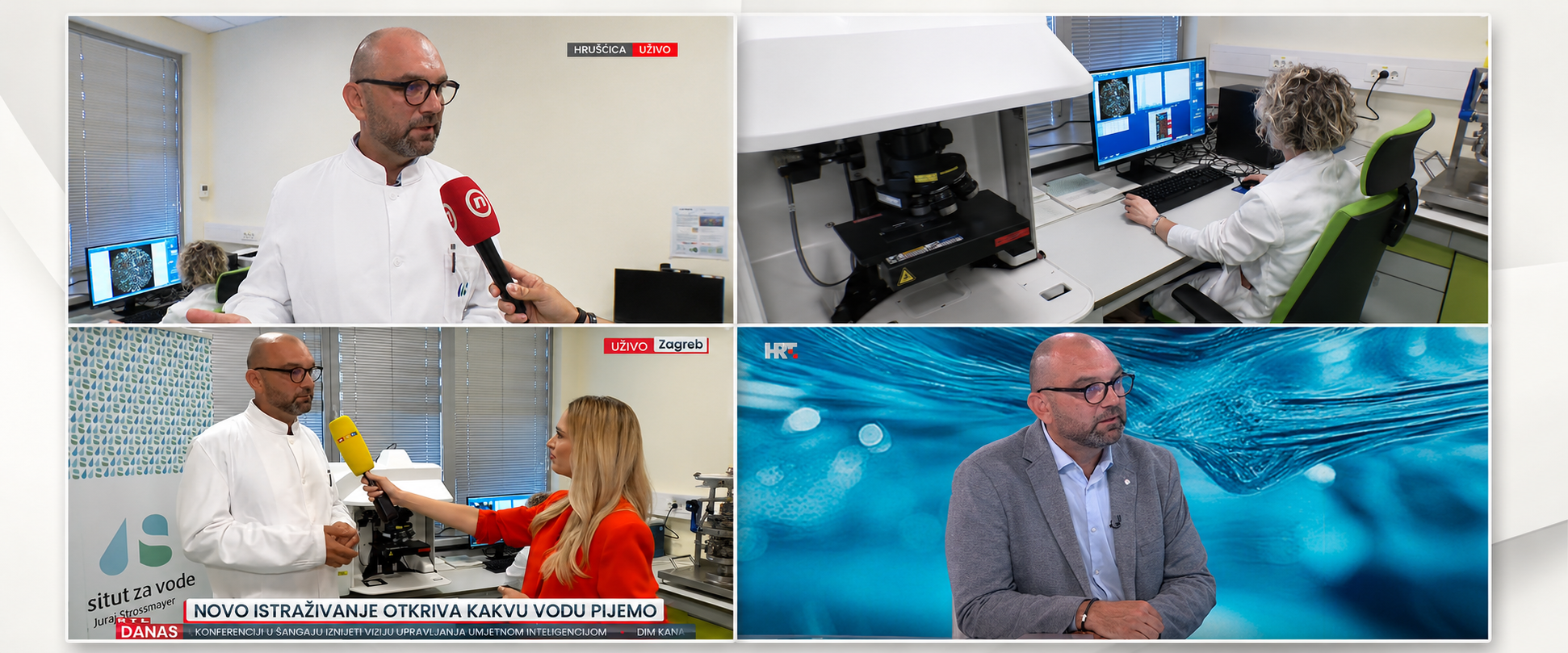
Due to pollution, habitat loss, invasive species, and climate change, mayflies are becoming increasingly threatened. Through surface water monitoring, the Josip Juraj Strossmayer Water Institute monitors the composition and abundance of macrozoobenthos, including mayflies, as one of the key biological indicators of ecological status, thereby ensuring the timely detection of changes and providing an expert basis for water protection.
Text prepared by: Vjeran Đanić