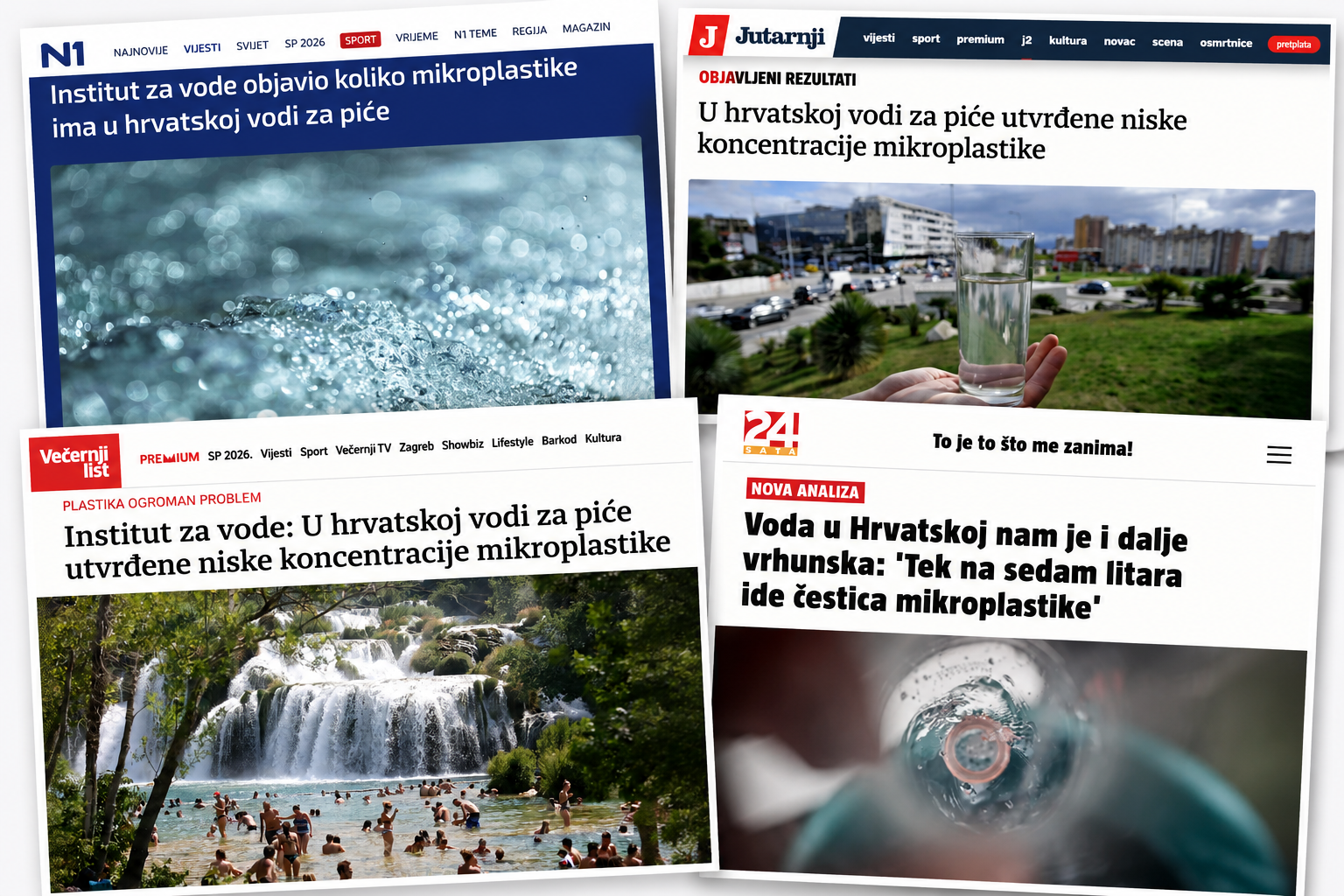
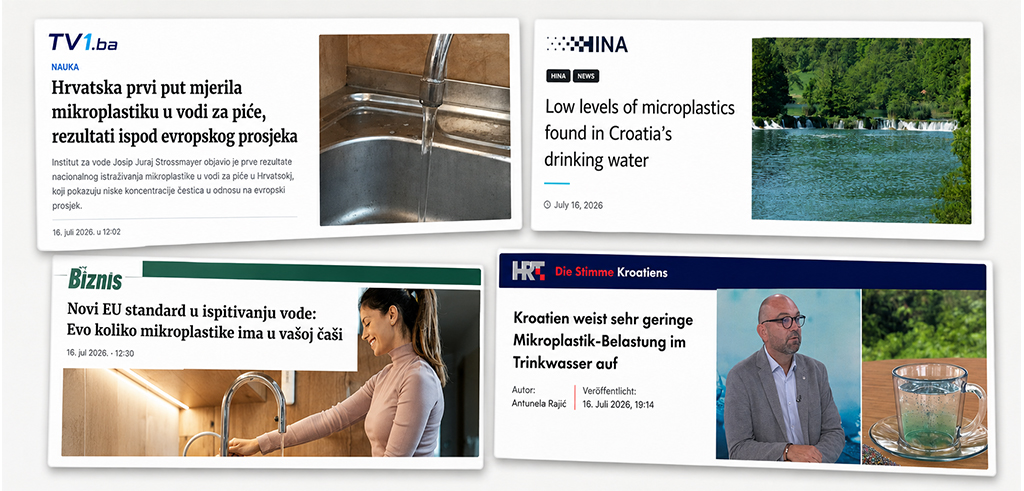
The publication of Croatia’s first national results from investigative monitoring of microplastics in water intended for human consumption attracted significant public and media attention yesterday.
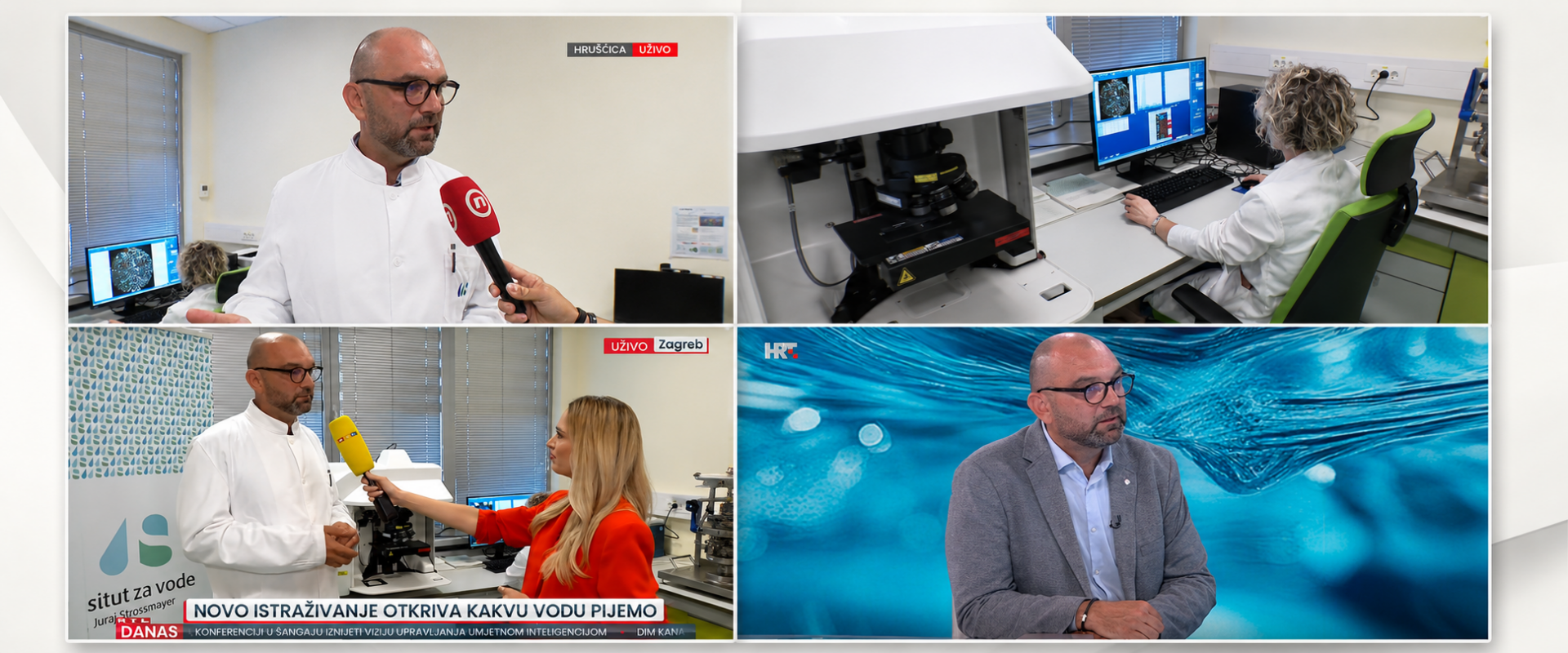
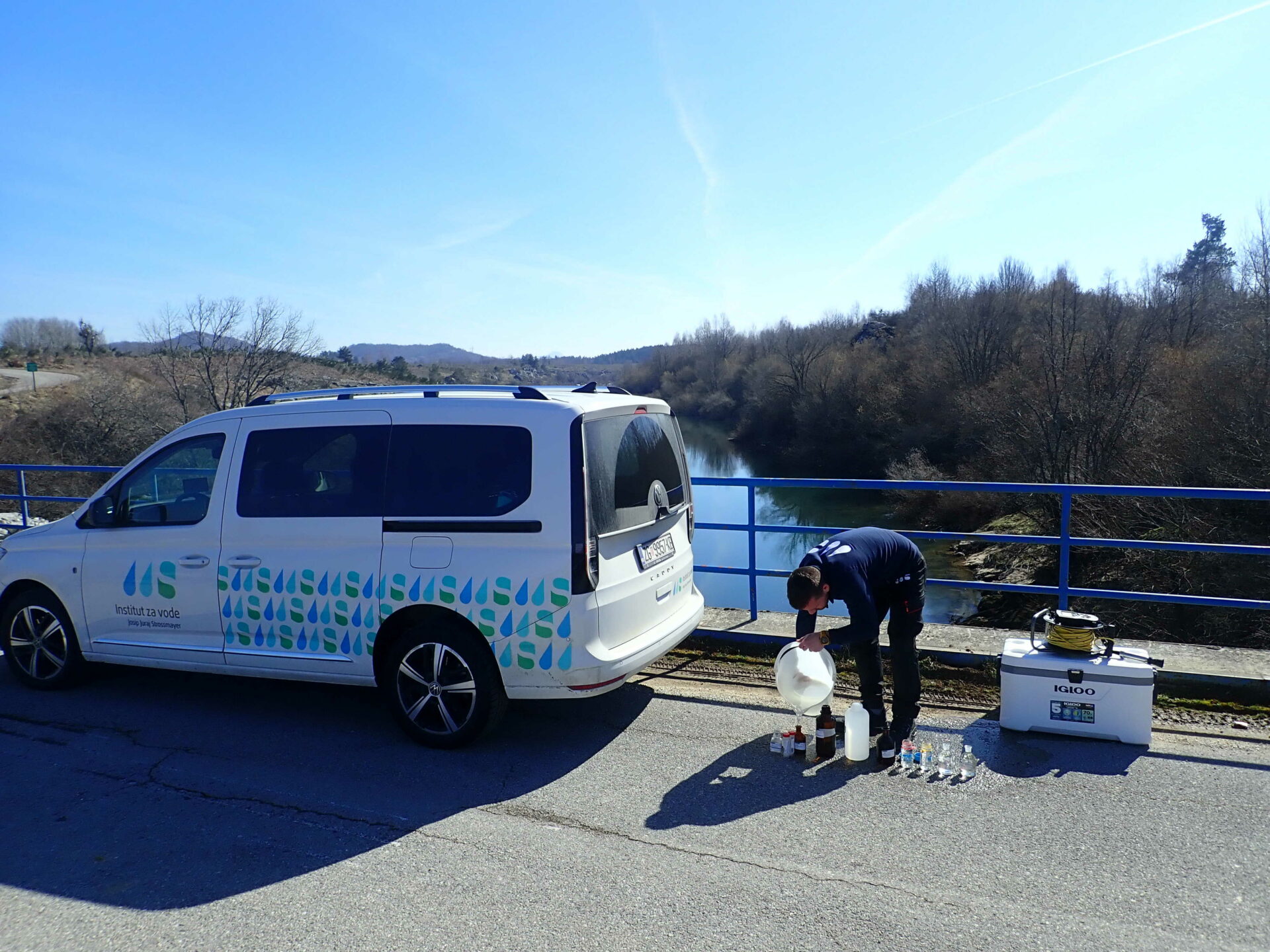
The findings of the study conducted by the Josip Juraj Strossmayer Water Institute, published in the Croatian Institute of Public Health’s 2025 Report on the Safety of Water Intended for Human Consumption in the Republic of Croatia, were widely reported by national print, broadcast and online media. The topic also featured prominently in major national news programmes.
Particular public interest focused on the finding that the average concentration of microplastics in treated drinking water and throughout the distribution network was 0.144 particles of priority polymers per litre, equivalent to approximately one microplastic particle in every seven litres of water.
At the same time, it was emphasised that these results should be interpreted in accordance with the European methodology for measuring microplastics. Their greatest significance lies not only in the measured concentrations themselves, but also in the fact that Croatia has, for the first time, established a national baseline value for microplastics in water intended for human consumption using a harmonised European methodology. This provides the foundation for long-term monitoring of trends and for the comparability of future results.
As part of the investigative monitoring programme, the Institute went beyond the mandatory measurements required under the European methodology by also analysing raw water. This made it possible, for the first time, to monitor changes in microplastic concentrations throughout the drinking water treatment process. The results showed that, in the observed water supply systems using surface water sources, the number of microplastic particles decreased by an average of 94.7% during treatment.
The strong public interest in this topic highlights the importance of continuous water quality monitoring and the ongoing development of professional expertise and laboratory capacities needed to implement the most advanced European monitoring methods. The Institute will continue systematically developing national monitoring of emerging water quality indicators, ensuring that decisions on the protection and management of water resources are based on reliable, comparable and scientifically robust data.