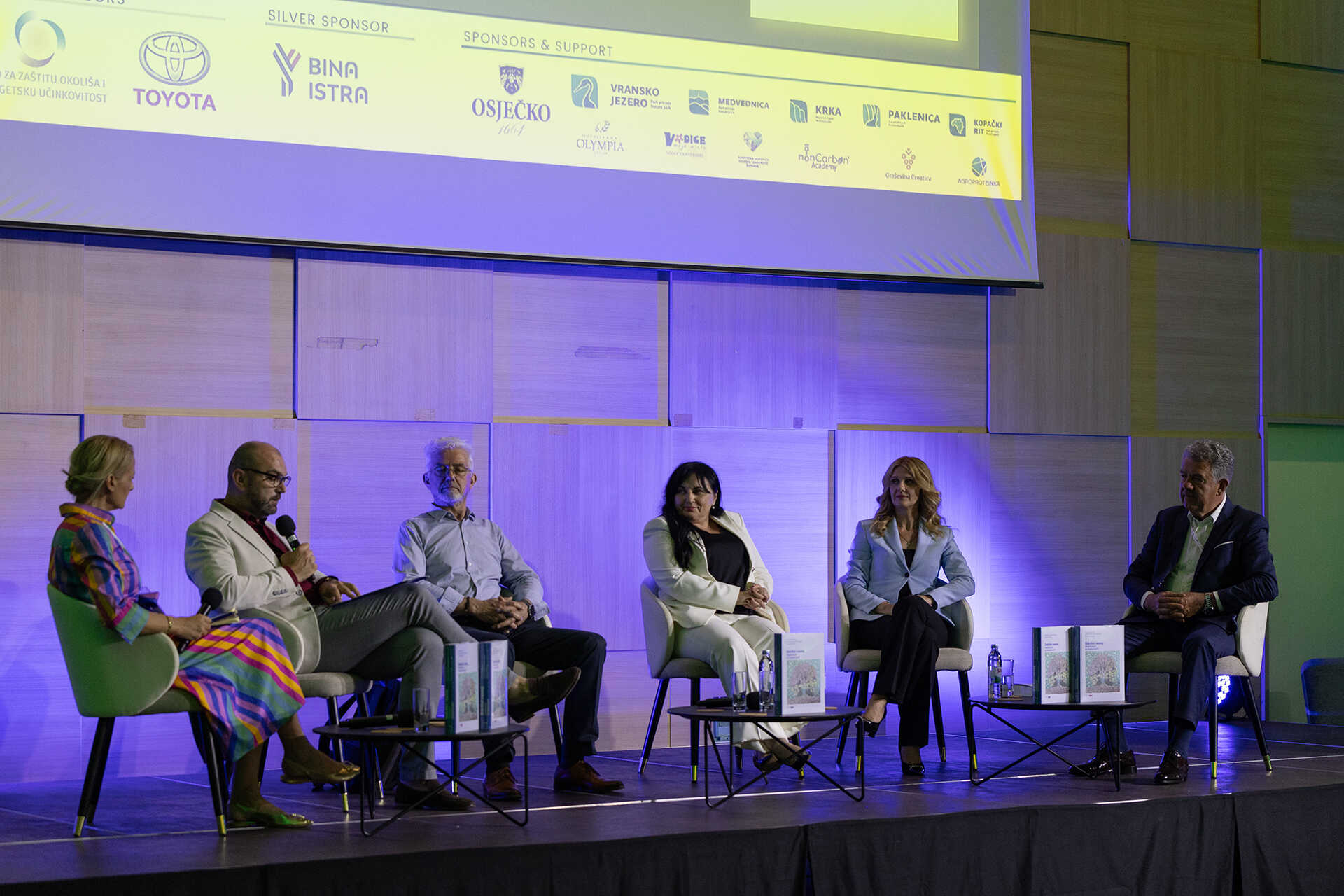
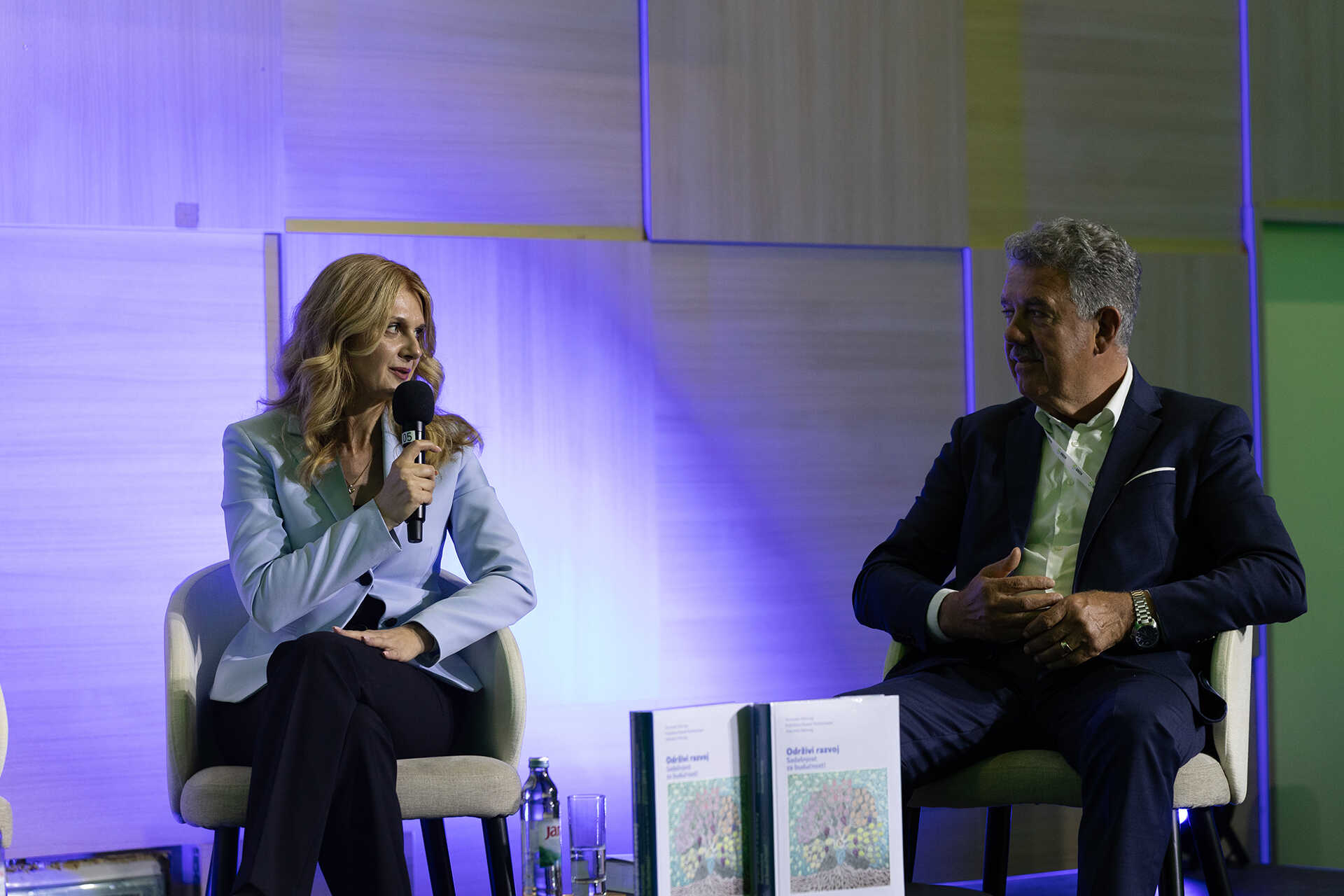
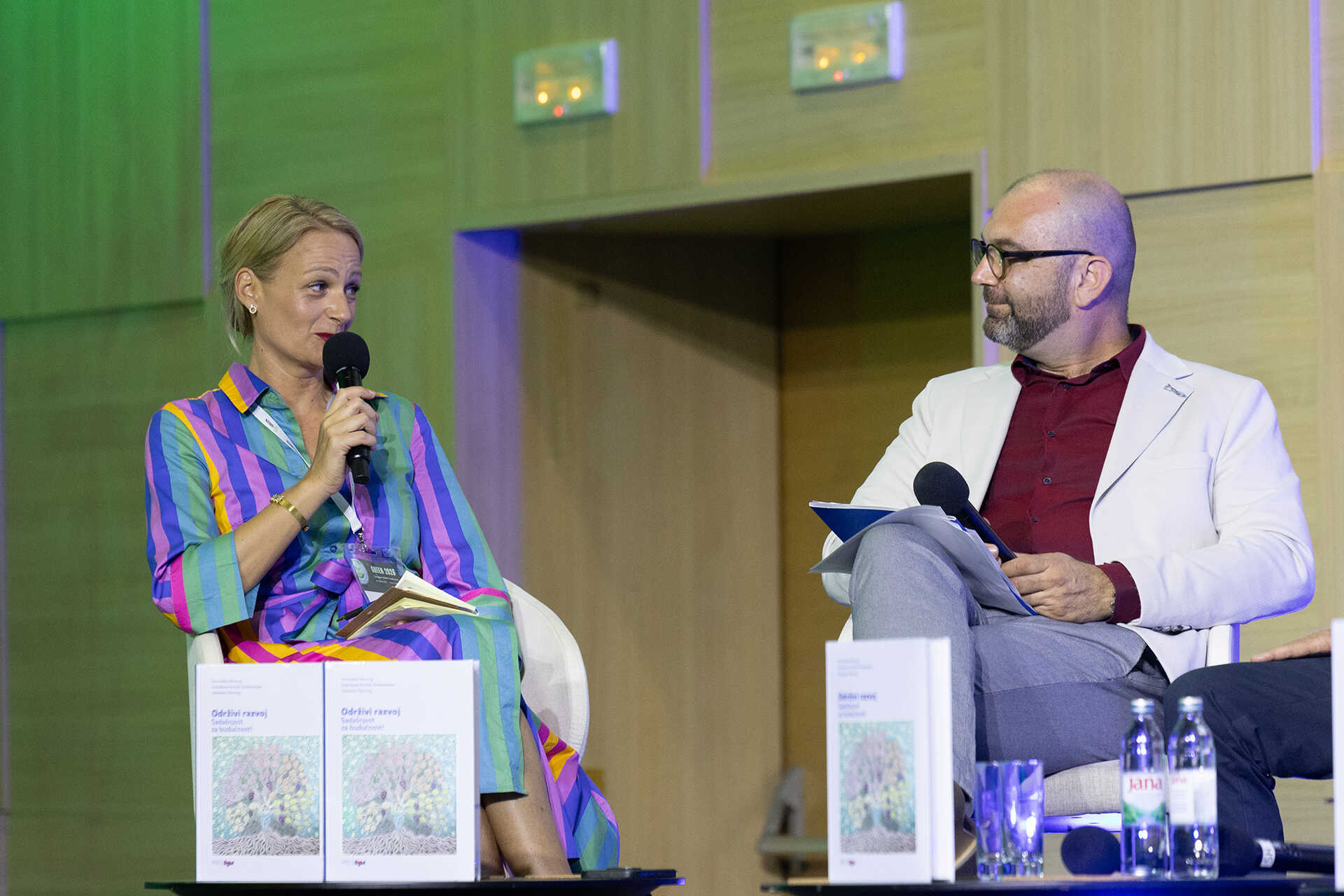
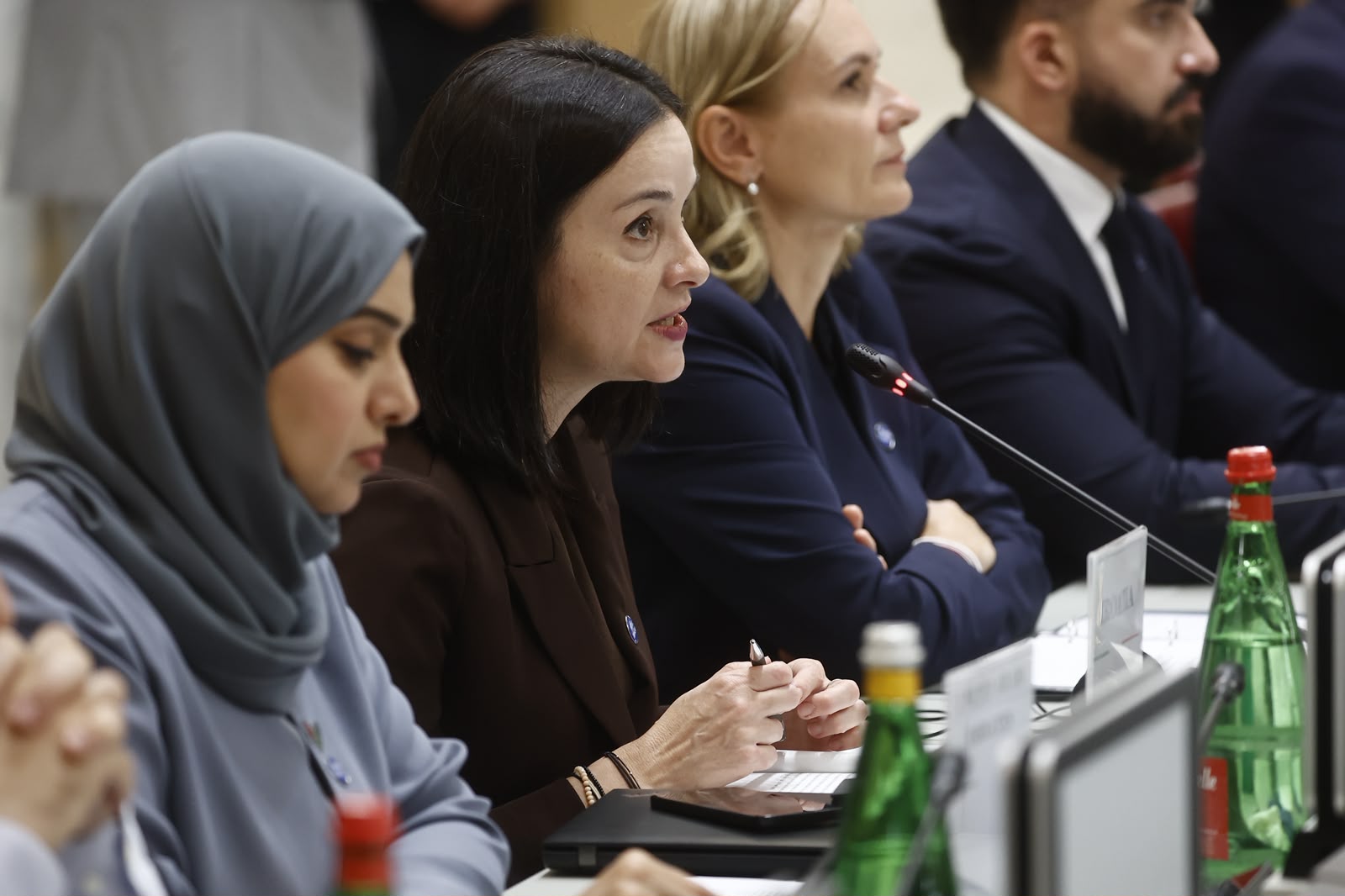
As part of the 4th European GREEN Conference – GREEN 2026 held in Vodice, the book “Sustainable Development: The Present for the Future!” by Nevenko Herceg, Svjetlana Stanić-Koštroman, and Antonio Herceg was presented. The book launch was held within the conference programme, which brings together science, professional practice, institutions, industry, and young researchers in the fields of environmental protection, sustainable development, and the green transition.
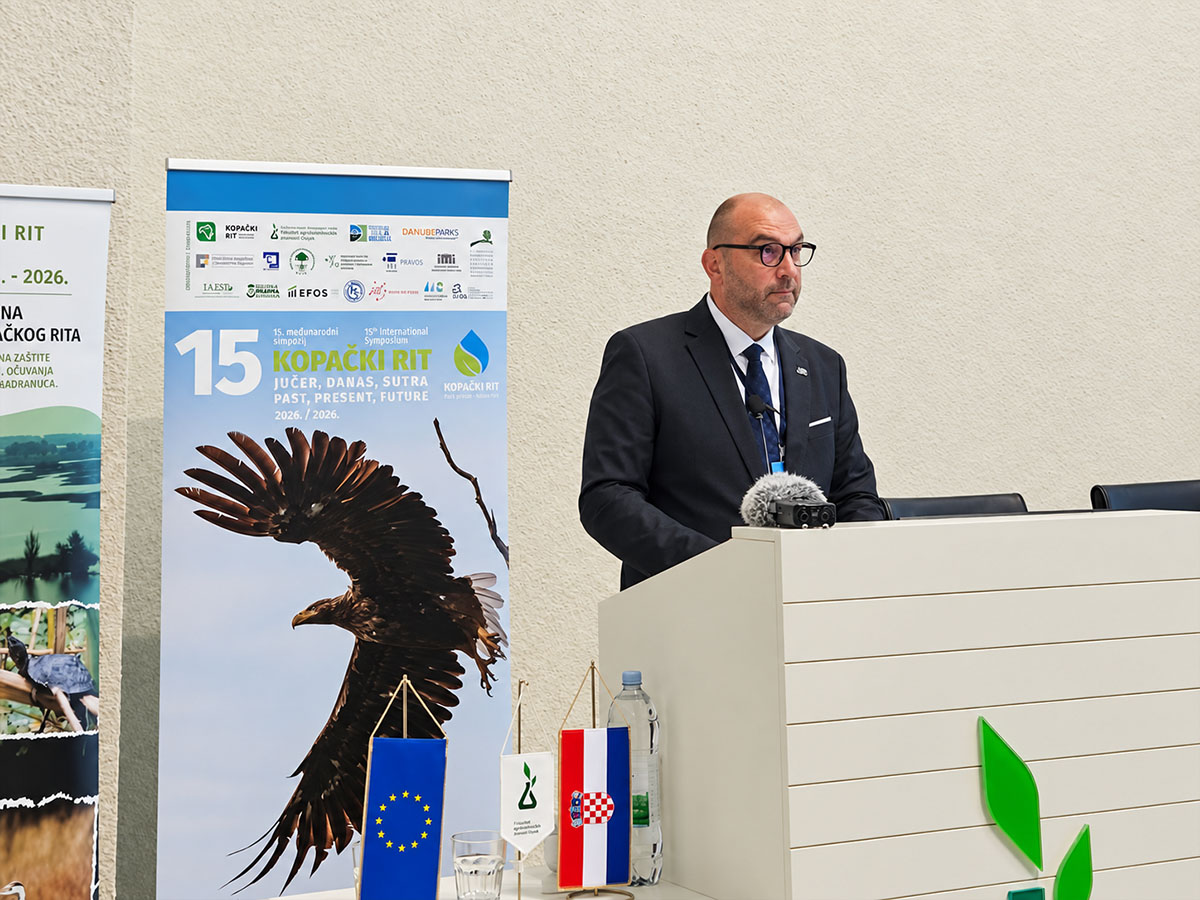
Among the panelists discussing the book was Dr. Mario Šiljeg, Director of the Josip Juraj Strossmayer Water Institute and the book’s editor. He emphasized that the publication arrives at a time when environmental issues can no longer be viewed separately from the economy, energy, food, health, security, and water.
“Already in the first chapters, it becomes clear that the authors are attempting something far more ambitious and demanding. They are striving to create a comprehensive framework for understanding the world we live in today. That is precisely why this work should not be seen merely as a textbook, but as an effort to provide our professional, academic, and public communities with a comprehensive map of sustainability,” Šiljeg stated.
The book explores the fundamental concepts of sustainable development, biodiversity conservation, and natural resource management in the context of contemporary global environmental challenges. In publicly available GREEN 2026 materials, it has been highlighted as a work that opens the door to a more responsible and resilient world.
Director Šiljeg particularly emphasized the value of the book’s interdisciplinary approach and its ability to connect natural sciences, social processes, economics, law, energy, water, climate change, and humanity’s responsibility toward the future.
“This book connects ecology and economics, law and natural sciences, climate change and geopolitics, energy and security, human health and environmental conditions, water and the future of civilization. For that reason, it goes beyond the scope of a traditional university textbook,” Šiljeg noted.
In his remarks, he paid special attention to the importance of water, highlighting that the chapters devoted to the hydrosphere, water resources, and water monitoring are among the most valuable sections of the book from the perspective of institutions working in the fields of water and environmental protection.
“Today, when we talk about water, we are no longer talking merely about a resource. We are not talking only about infrastructure, pipelines, pumps, and water supply systems. We are talking about the survival of societies, security, health, the stability of states, and the future of humanity,” Šiljeg emphasized.
During the presentation, the book was also placed within the broader international context of influential works and reports that have shaped the modern understanding of sustainable development, from Silent Spring by Rachel Carson, through Our Common Future, to The Limits to Growth by the Club of Rome. This further underscored the ambition of the publication to present sustainability not as an isolated environmental topic, but as an interconnected system of knowledge, public policy, responsibility, and action.
It was concluded that “Sustainable Development: The Present for the Future!” is intended not only for the academic community, but also for institutions, decision-makers, businesses, the education sector, and everyone who understands that the future of the environment, water, and society is shaped by the decisions we make today.
“This book was not created to sit on a shelf. It was created as proof that major professional works are the result of years of dedication, knowledge, experience, and the belief that science can still serve the common good,” Šiljeg concluded.