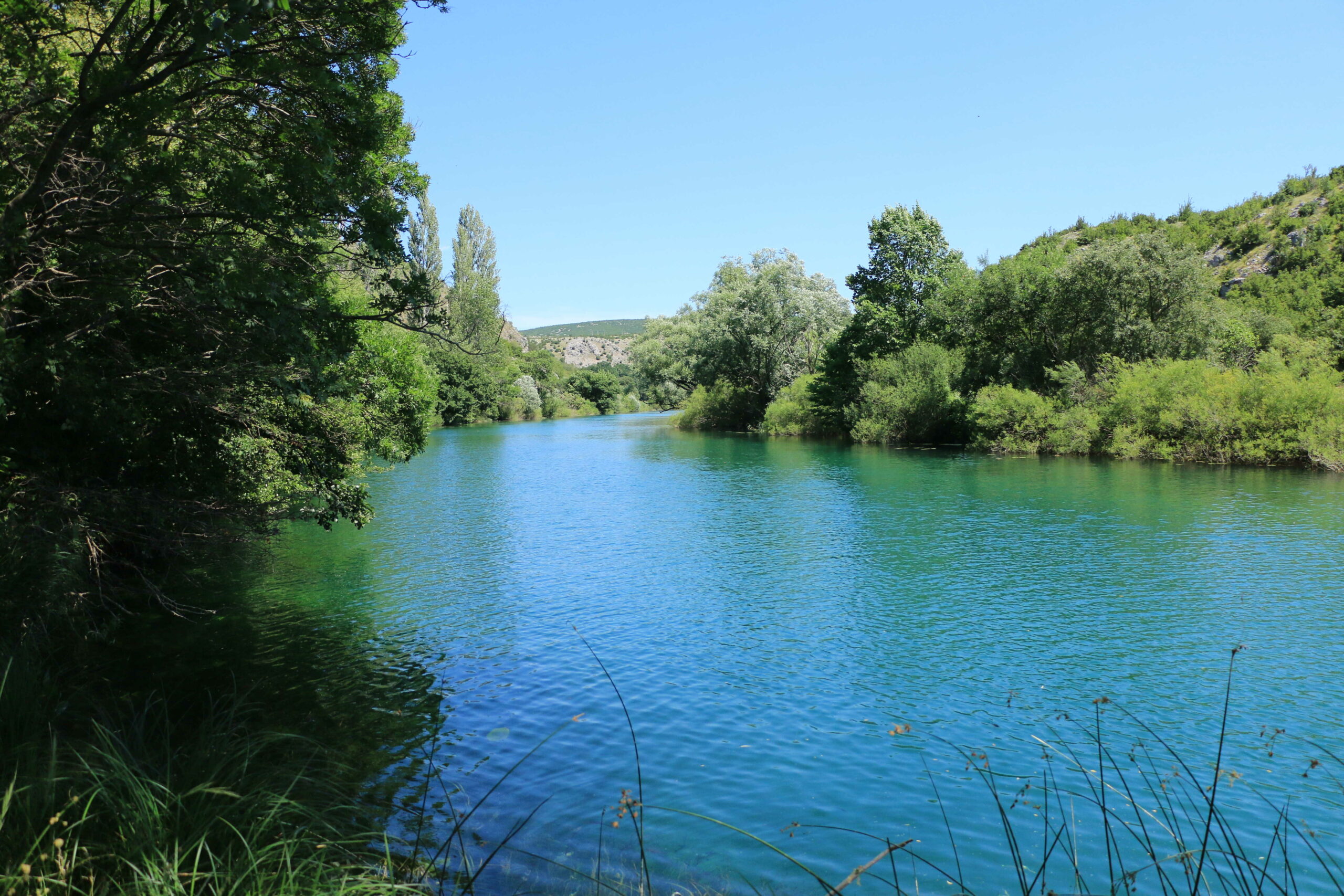
The Zrmanja River is one of those rivers that is not only observed with the eyes, but experienced as a whole. Carved into the karst landscape of southern Lika and northern Dalmatia, it represents a unique combination of water, stone, and time.
The river springs at the foot of Poštak Mountain at an elevation of approximately 395 meters above sea level. Along its 69-kilometre course, it drains a catchment area covering nearly 900 km². It belongs to the Adriatic basin and flows into the Novigrad Sea downstream of Obrovac.
In its lower course, the river forms an estuary where freshwater and seawater mix. The lighter freshwater remains near the surface, while saltwater occupies deeper layers, creating a halocline. Such conditions support the development of diverse aquatic communities, including species inhabiting both freshwater and brackish environments.
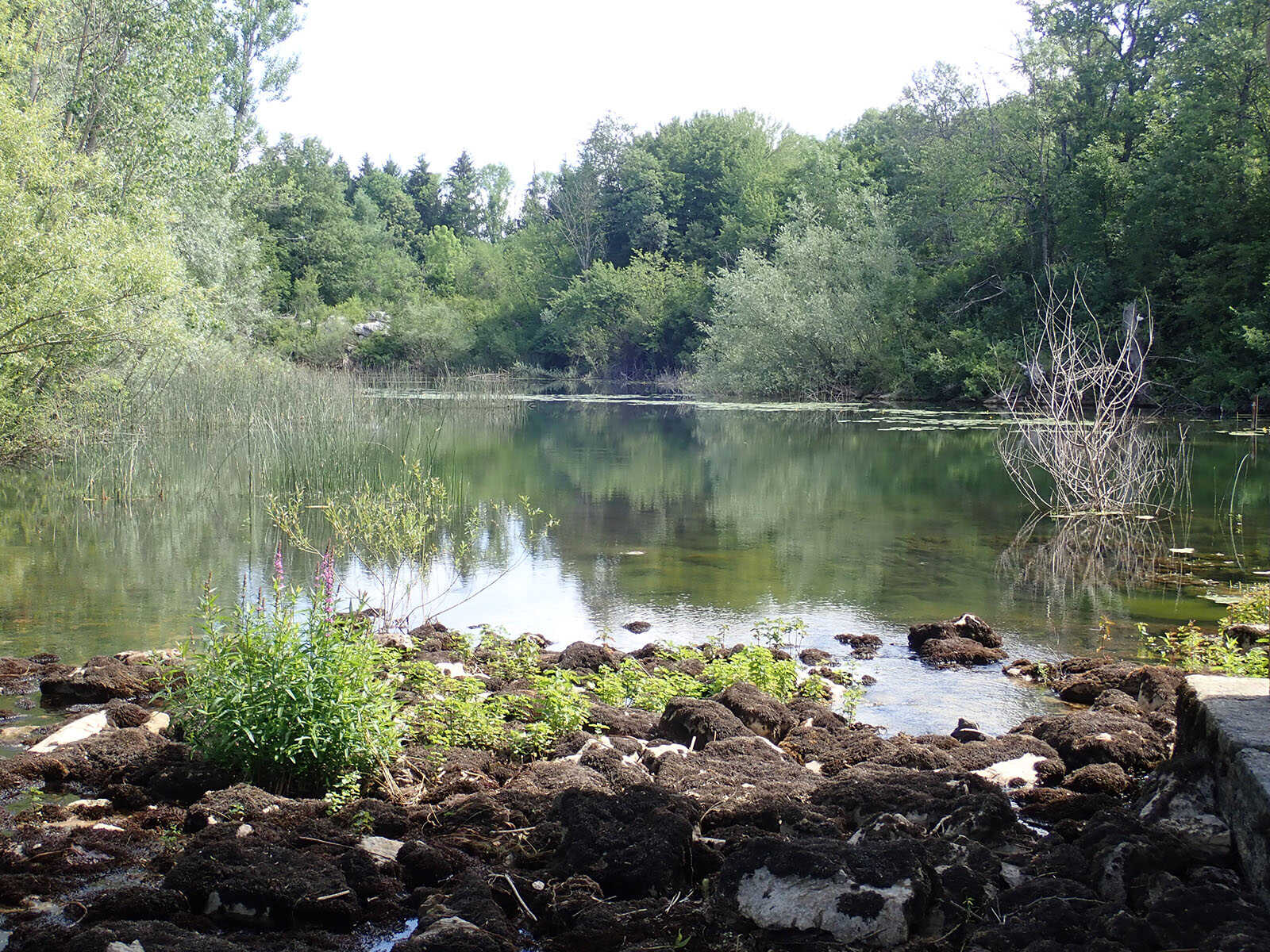
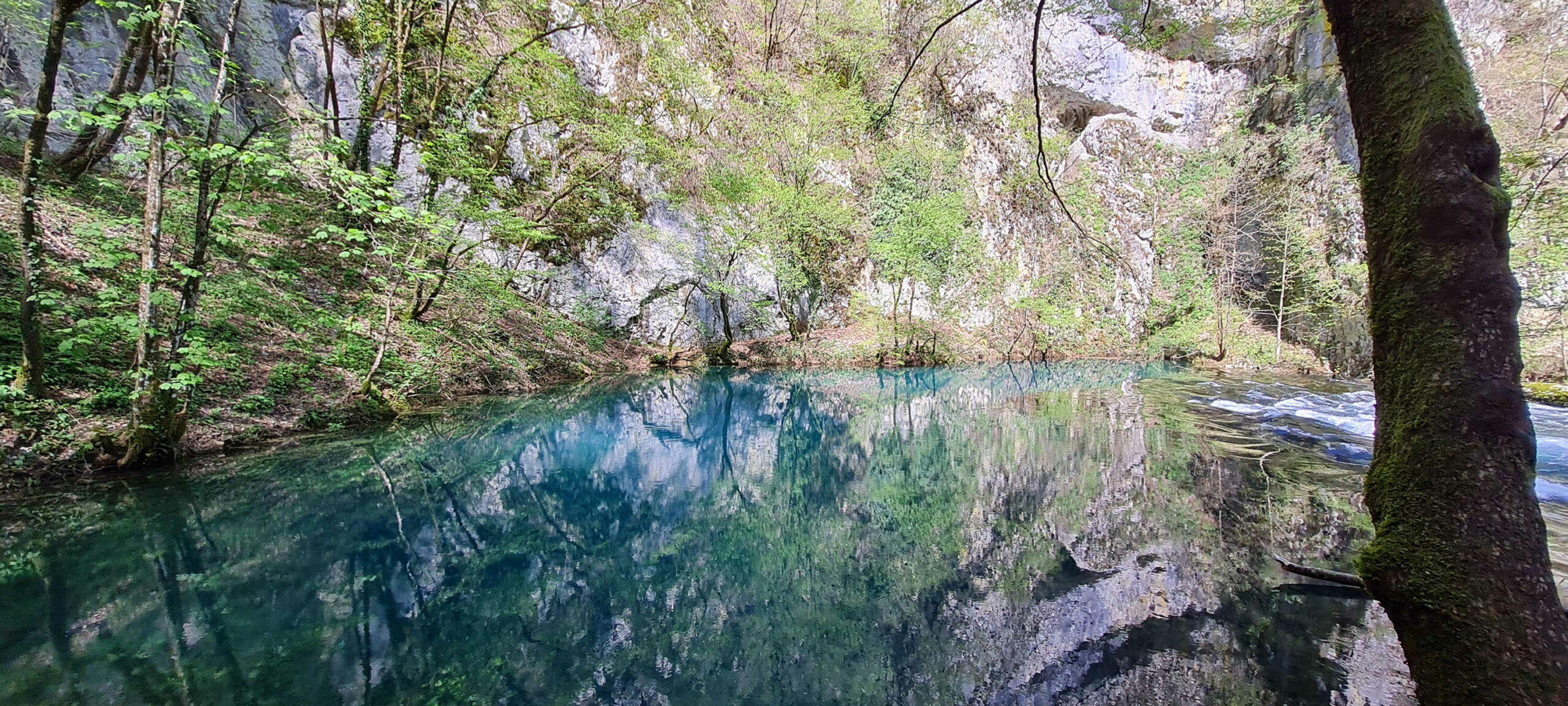
As it flows through the karst terrain, the Zrmanja shapes one of the most distinctive river landscapes in Croatia. It passes through the area of Muškovci, known for its waterfalls and old watermills, and forms tufa barriers such as Berberov Buk and Veliki Buk. From Kravlja Draga through Žegar to its mouth, the river cuts through canyons whose cliffs reach heights of up to 200 meters.
Due to its geomorphological value, the Zrmanja Canyon is protected as a natural monument, while parts of the river course are included within the Velebit Nature Park or designated as protected landscapes.
The hydrological system of the Zrmanja is characterized by underground connections typical of karst regions. In the past, it had a surface connection with the Krka River, while today this connection takes place underground. Its most important tributaries are the Krupa River and Dabarnica, while the catchment also includes sinking rivers such as Otuča, Ričica, and Obsenica.
The Krupa River is renowned for its clear water and tufa waterfalls. Along its course stands Kudin Most, a bridge built using the traditional dry-stone construction technique. According to local legend, it was built by a young man to reach the girl living on the opposite bank of the river, which is why it is often associated with perseverance and devotion.
Nearby is also the Krupa Monastery, situated in a natural setting surrounded by rapids and rocky cliffs.
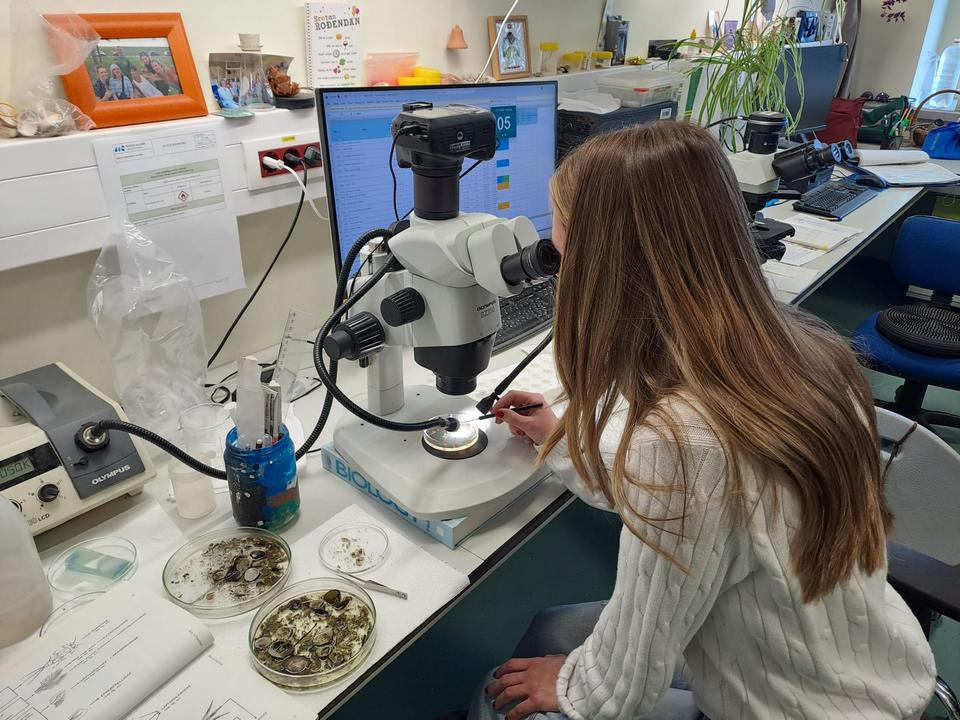
In order to preserve the river’s natural values and water quality, the Josip Juraj Strossmayer Water Institute conducts monitoring of the Zrmanja River at 11 monitoring locations, from its source to the area around Obrovac. The monitoring also includes the tributaries Krupa, Otuča, and Ričica, ensuring reliable and comparable data on the condition of this river system.
Text prepared by: Lucija Podrug
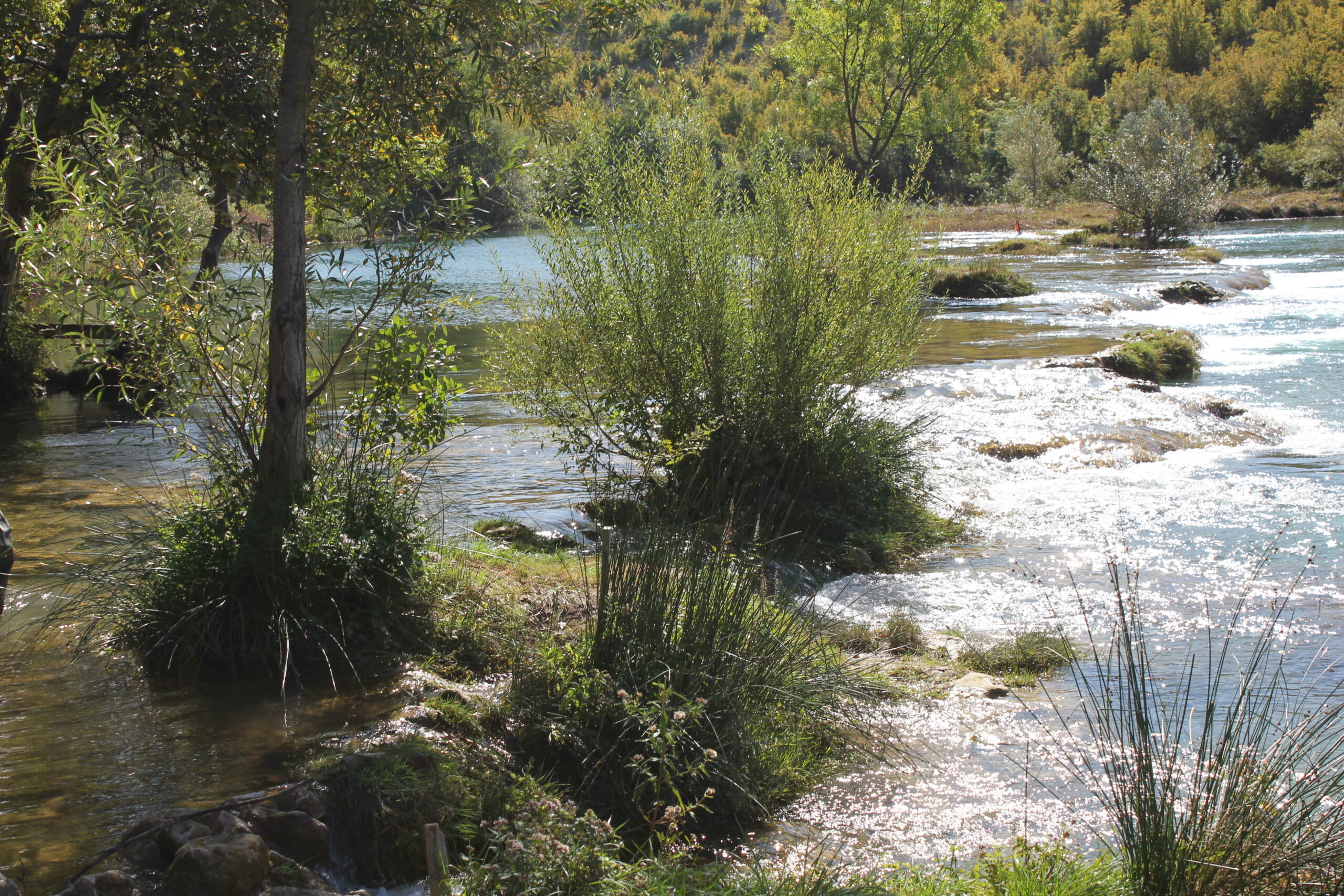
Zrmanja, Berberov buk.
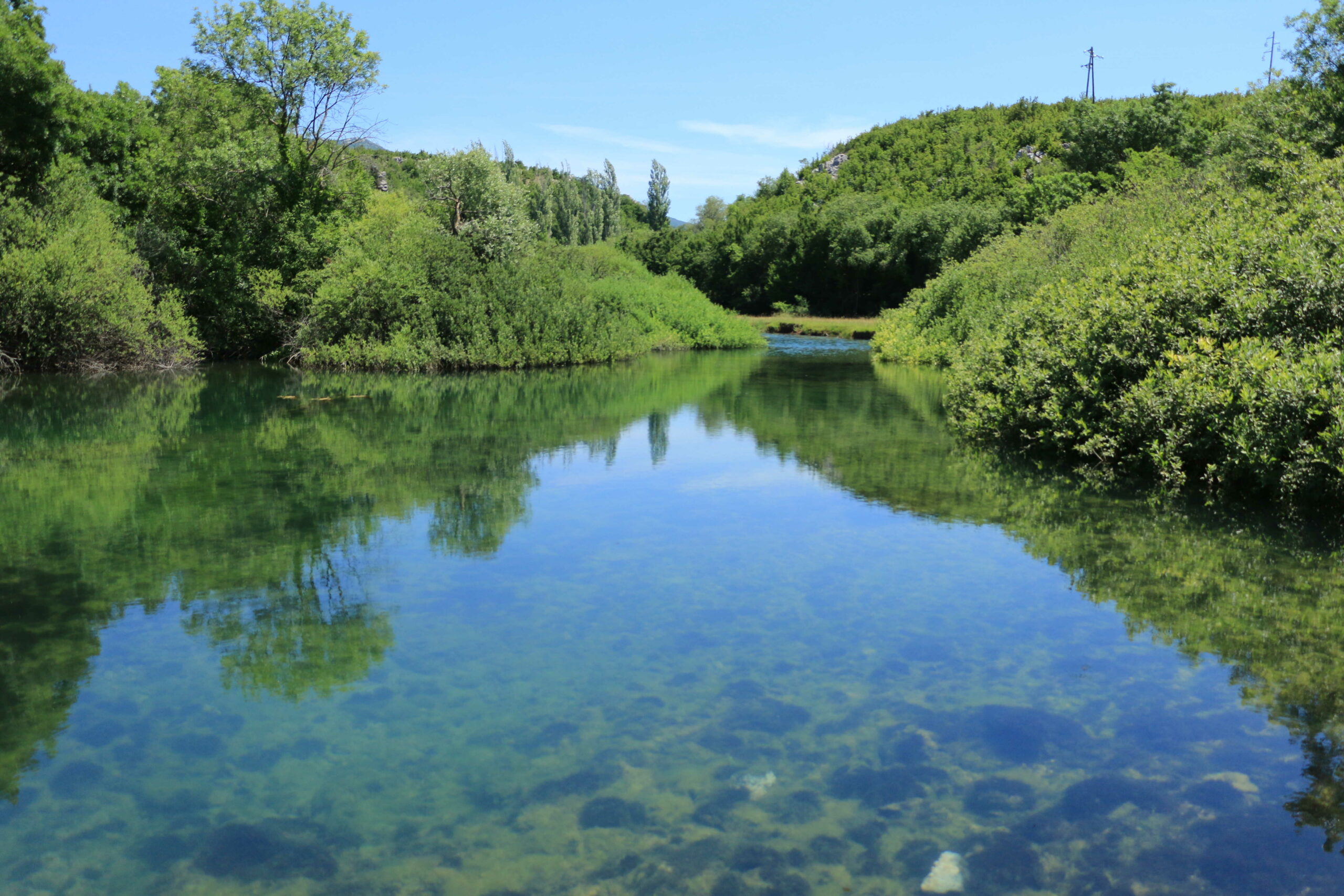
Krupa, Manastir.